Get in Touch with EETO

Precision Fiber Laser Technology
Sheet Metal Laser Cutter
EETO Fiber Laser Cutting Machines
0.03mm Accuracy | 1.5kW-20kW | 7 Products Lines | since 2014
1,000+
Machines Deployed
6,000m²
Factory
50+
Countries Served
How Fiber Laser Cutting Works
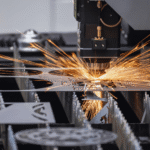
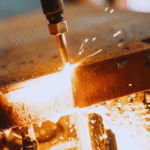
The process of fiber laser cutting proceeds in four stages:
01
First, a laser source built around a rare-earth doped optical fiber fires a high energy beam at a wavelength of 1.06m.
02
Second, through a very flexible optical fiber cable, the beam is delivered directly to the cutting head, removing the need for mirror adjustment required by CO2 laser systems.
03
Third, inside the cutting head, a parabolic lens focuses the beam to a spot as small as 0.01mm in diameter on the work surface, concentrating the energy to locally melt or vaporize the workpiece.
04
Fourth, a high-pressure assist gas nozzle blows the molten material clear of the cut kerf and shields the focus lens from spatter and debris.
CO2 vs Fiber Laser: Which Is Better for Metal Cutting?
Parameter |
Fiber Laser |
CO2 Laser |
|---|---|---|
| Wavelength | 1.06 μm | 10.6 μm |
| Electrical Efficiency | 30–35% | 10–15% |
| Reflective Metal Cutting | Excellent (aluminum, copper, brass) | Poor — beam reflection risk |
| Beam Delivery | Optical fiber (no alignment) | Mirrors (regular alignment needed) |
| Maintenance Cost | Low — virtually no consumable optics path | High — mirrors, gas, turbine blades |
| Diode Life | 100,000+ hours | ~30,000 hours |
| Thin Metal Speed | 2–3x faster | Baseline |
| Best For | All metals, especially reflective metals | Thick non-metals, some thick mild steel |
What Materials Can You Laser Cut?
Can sheet metal be laser cut? Yes.
Fiber laser cutting is suitable for all of the major industrial metals, including: Carbon, stainless and tool steel, Aluminum, copper, brass and titanium. Can sheet metal be laser cut? Yes—the fiber laser has the highest position accuracy (0.03mm) and fastest processing speed of any laser on the market: from 0.5mm to 40mm thick, depending on the power.
Materials not to laser cut:
Materials not to laser cut: PVC (polyvinyl chloride) releases toxic chlorine gas when heated and will cause health hazards along with damage to the machine components. Polycarbonate does not absorb infrared light well, smolders and produces toxic fumes rather than clean cuts. When processed this way, HCN forms. Other plastics need a CO2 laser or not to be processed at all, with the exception of approved non-metallic materials and appropriate labels.
Types of Sheet Metal Laser Cutting Machines
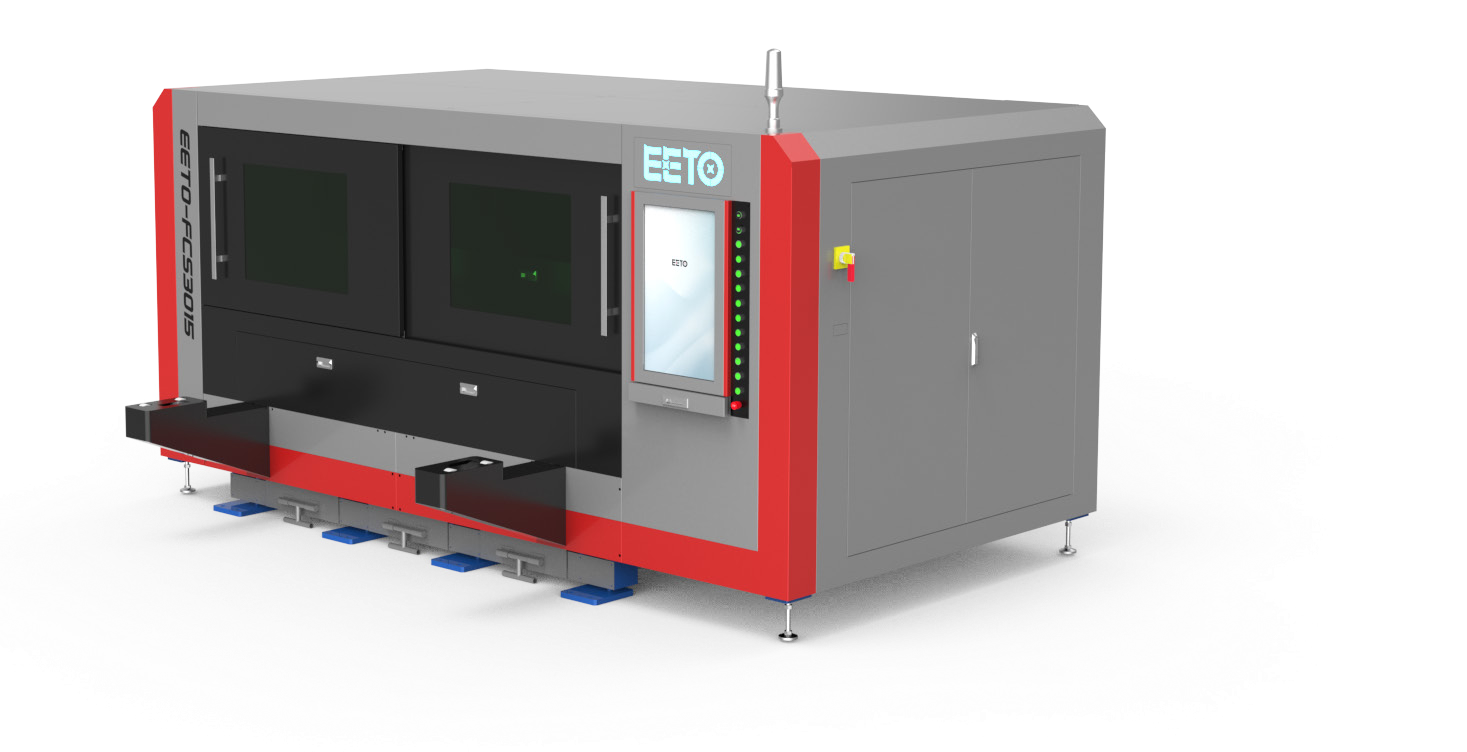
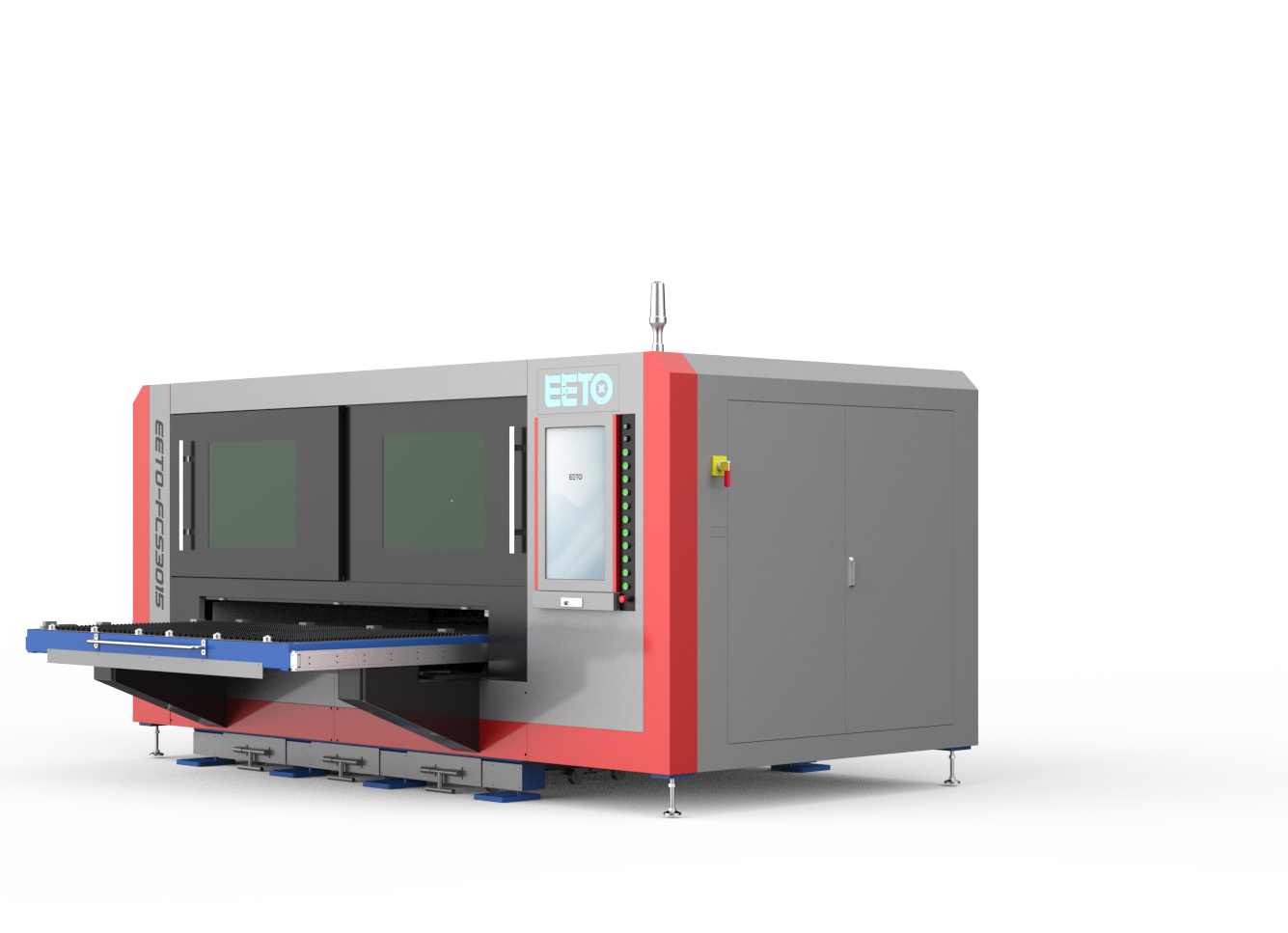
FCS Series
Drawer Type Mini Enclosed
Ready to operate near plug-and-use all-in-one fiber laser cutting machine for small metal parts from a space-efficient product range. Its un-enclosed cube design ensures operator safety and dust containment in the same room. The single drawer table helps with loading small-sized sheet metal.
Power1.5–6kW
TableSingle Drawer
EnclosureFull
Working Area2050×1050 / 3050×1550mm
LaserMaxphotonics
Cutting HeadBoci
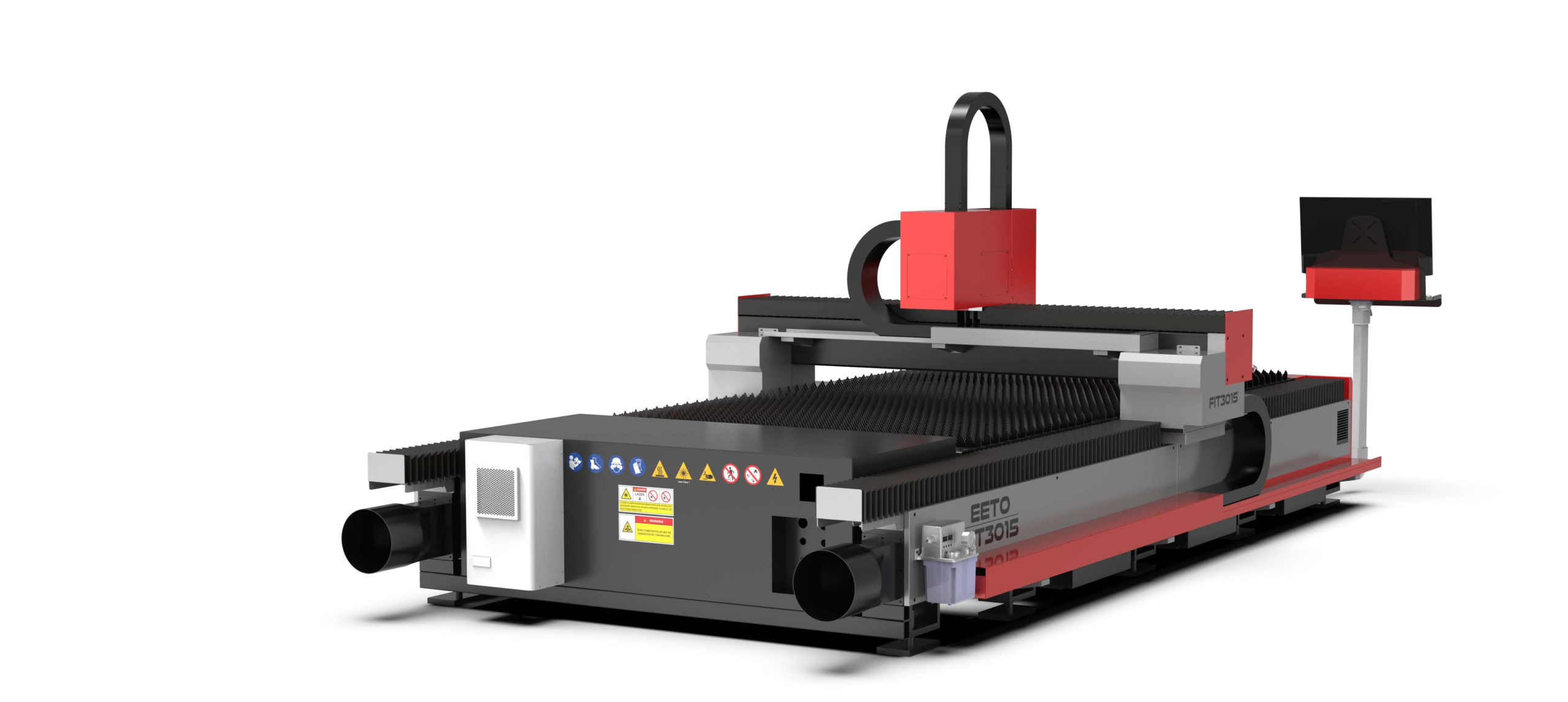
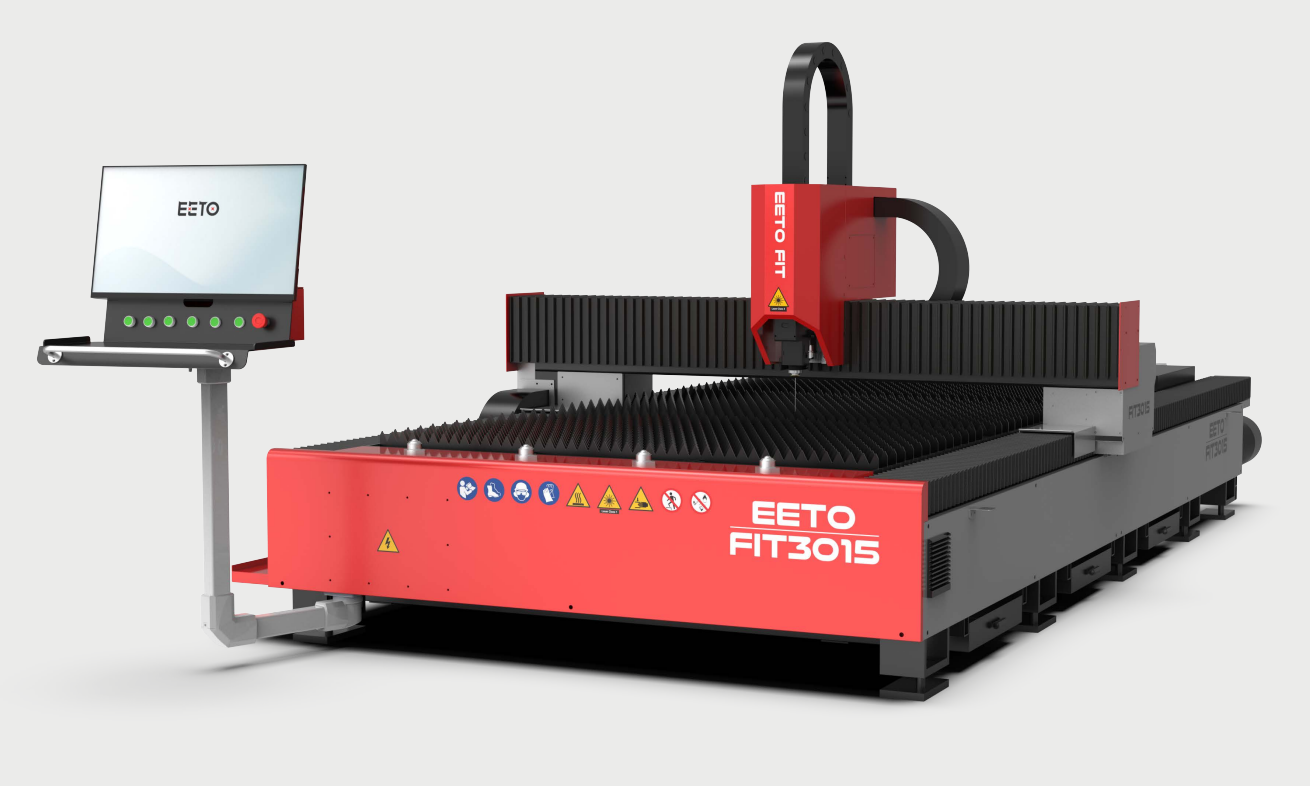
FIT Series
Compact Entry-Level
A cost-effective CNC laser cutting machine for small workshops entering the fiber laser metal cutting market. Open-type frame reduces purchase cost. Capable of production-class cutting quality on carbon steel to 20mm, stainless steel to 16mm and aluminum to 10mm at 6k W.
Power1.5–6kW
TableSingle
EnclosureOpen
LaserMaxphotonics
Cutting HeadBoci
Best ForSmall Workshops
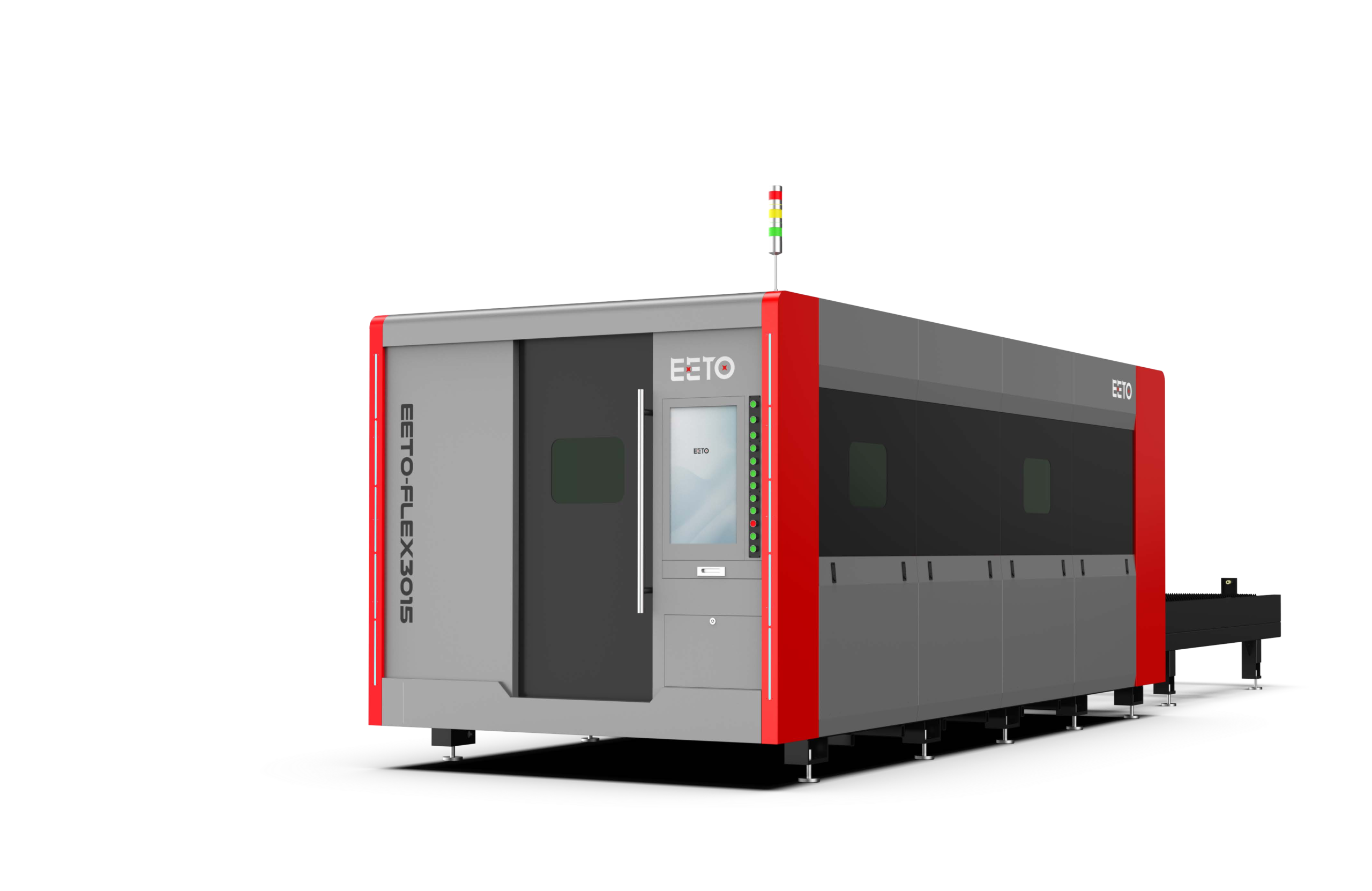
FLEX Series
Compact Dual Exchange
Combining full enclosure safety with dual exchange table productivity and a minimal footprint. Two FLEX systems fitted within 40ft shipping containers. The ideal multi-machine plant. Capable of a cutting speed to 30m/min with its accurate position to 0.03mm.
Power1.5–6kW
TableDual Exchange
EnclosureFull
Speed30 m/min
Accuracy0.03mm
Shipping2 per 40ft container
Best Seller

FLS Series
Open Type — Best Seller
EETO’s widest general purpose metal laser cutter, with the widest power and working area options offered by any supplier in the world. EtherCAT bus control with YASKAWA servos provides travel speeds to 120 m/min and 1.2G acceleration. Capable of carbon steel to 40mm at 20k W. The most capable value general machine for any general application demanding general metal fabrication and job shop production.
Power1.5–20kW
TableSingle
Speed120 m/min
Accel1.2G
Accuracy±0.03mm
Areas3015 – 12025mm
FLX Series
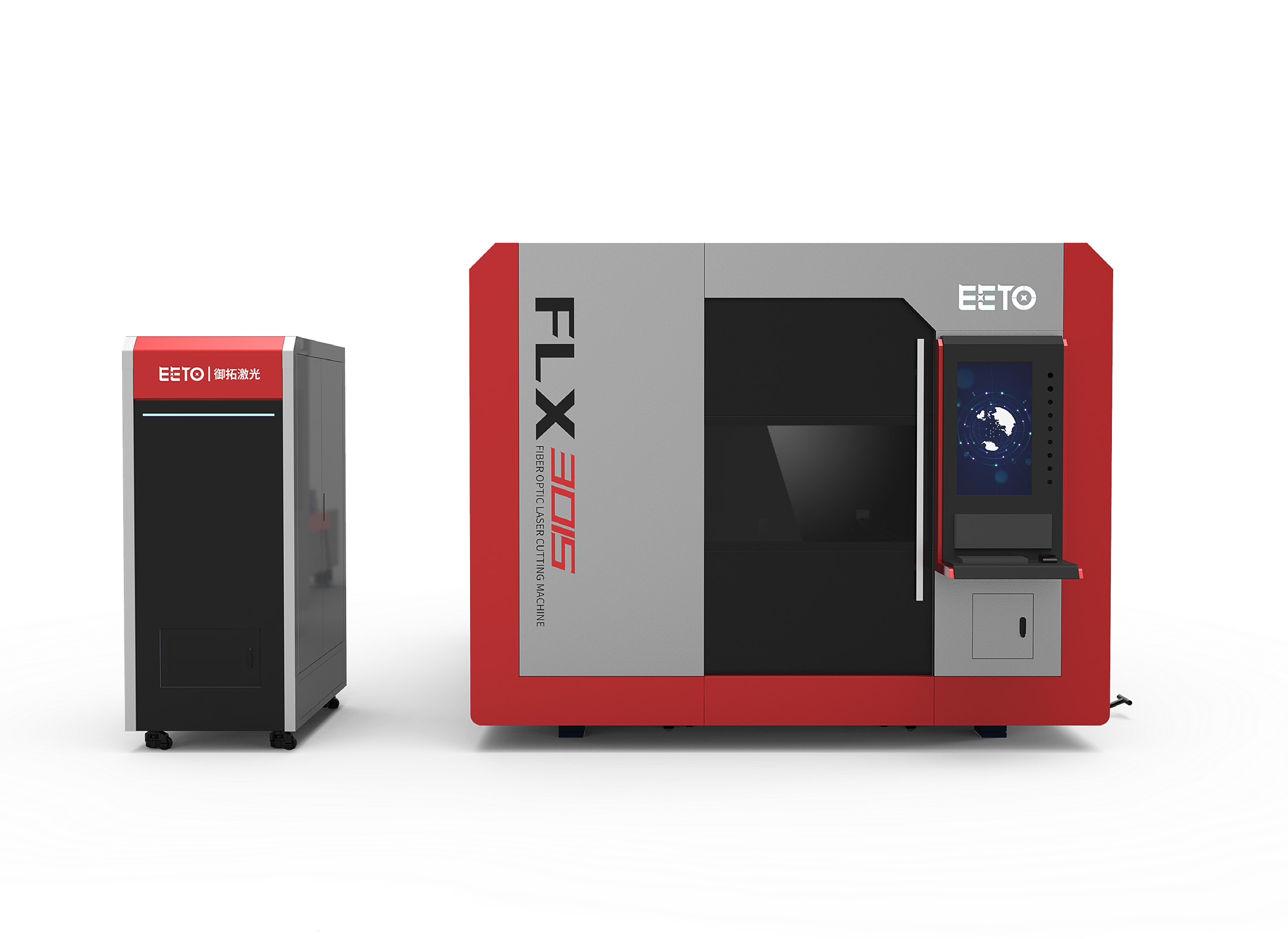
Exchange Table
Dual exchange table configuration designed around high-volume, 24/7 machining processes where minimization of material changeover time is essential. Load one table while the other is in cut mode. Available with the widest power range of any fiber metal laser to 30k W, enabling the highest volume material handling application output.
Power1.5–30kW
TableDual Exchange
EnclosureOpen
Working AreaUp to 6000×2500mm
OperationContinuous
Best For24/7 Production
FLX-GII Series
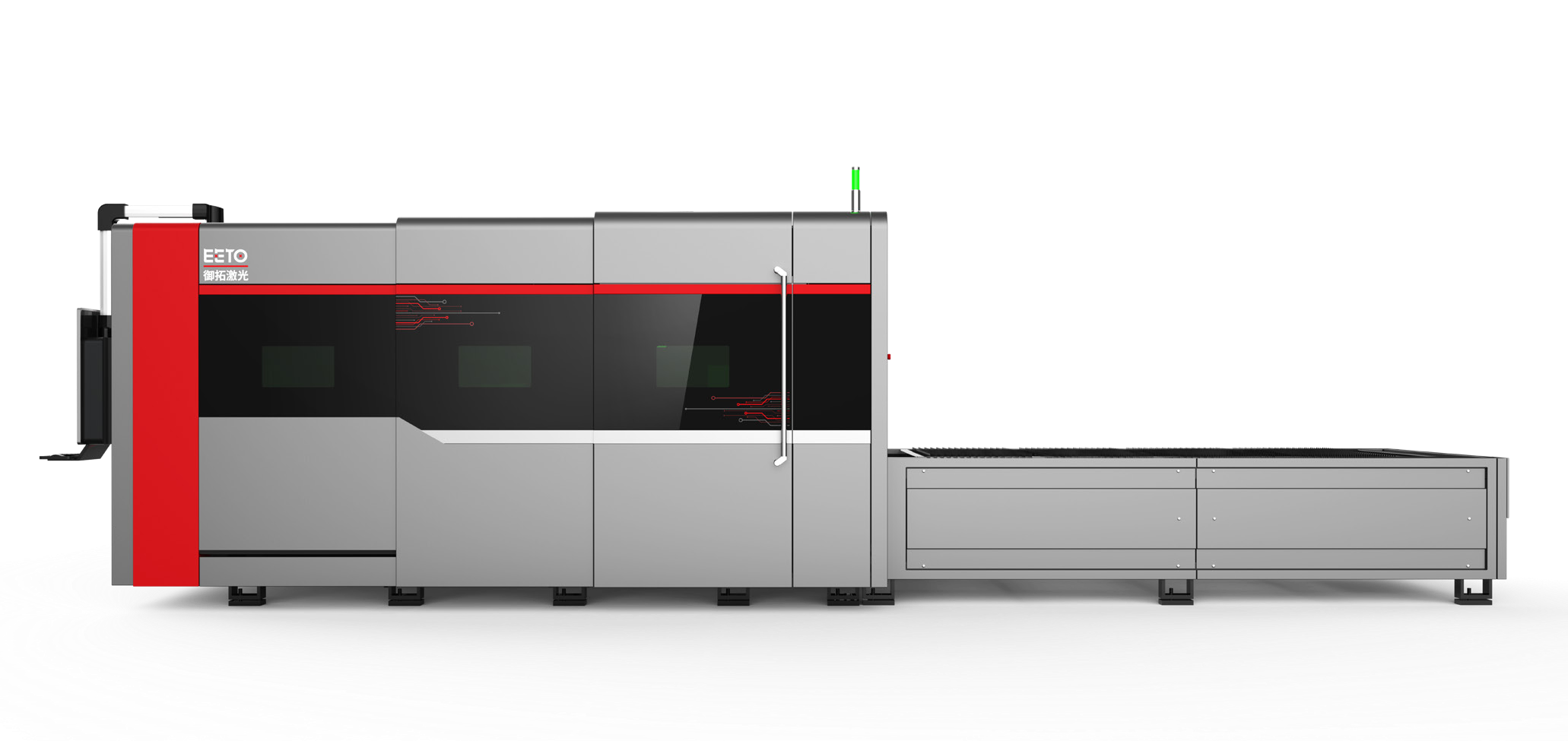
Pro Enclosed Exchange — CE Certified
Premium enclosed CNC fiber laser cutting machine with dual exchange table ideal for EU markets with mandatory machine safety certification. Incorporating Beckhoff EtherCAT controller, Precitec Pro-cutter head, IPG laser source and Bosch Rexroth motion system. Time to perforate only 0.24s.
Power2–20kW
TableDual Exchange
EnclosureFull CE-Certified
Pierce0.24 sec
ControllerBeckhoff EtherCAT
Weight7.8 tons (3015)
FGT Series
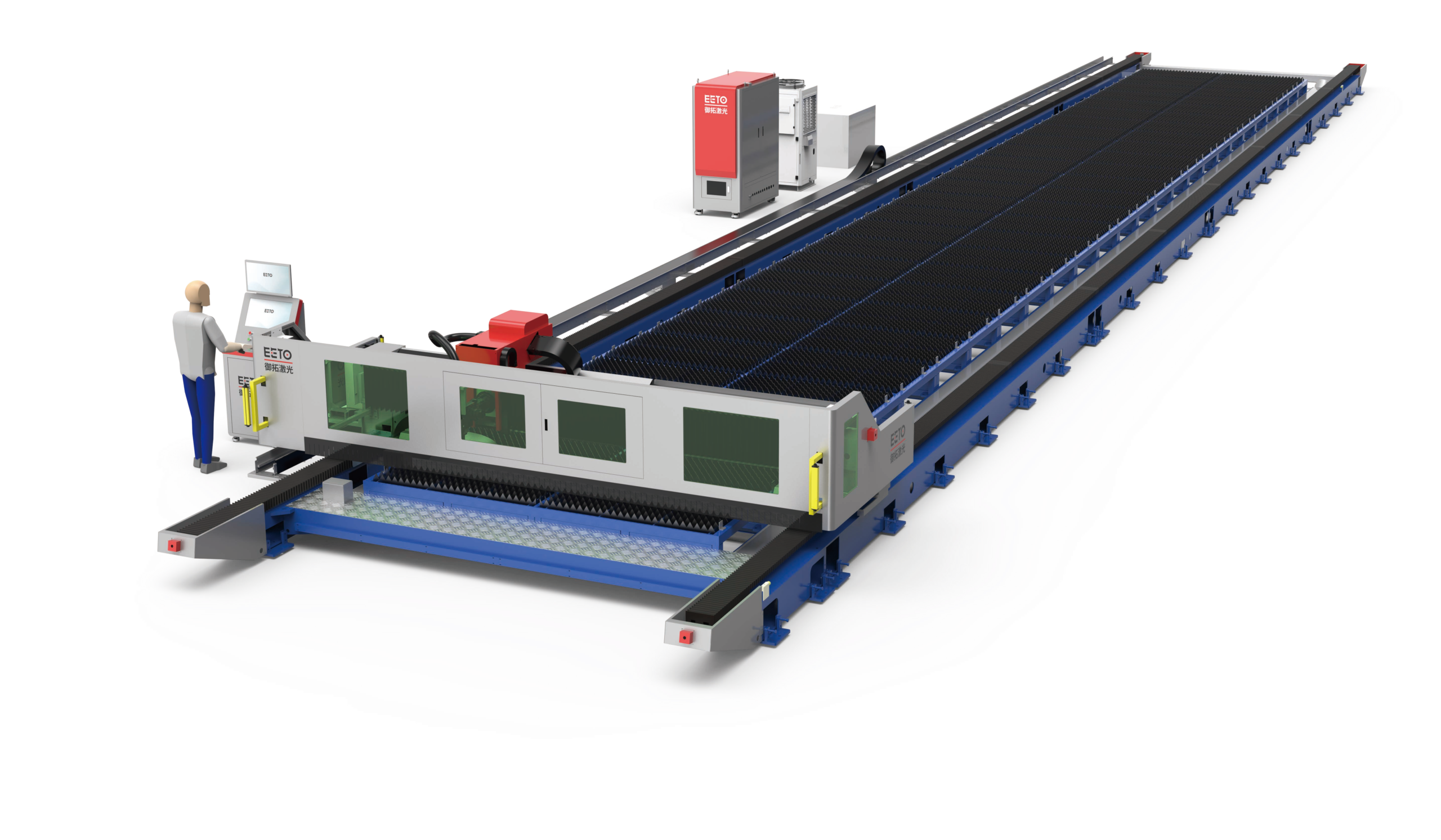
Gantry Heavy-Duty
Heavy duty application designed for the toughest work: shipbuilding, structural steel and heavy plate metal fabrication. Choice of either the Full Cover (bevel 45, tables up to 120003000mm) or Gantry Cover (bevel 55, tables up to 360003500mm) configurations. Up to 60k W with Yaskawa EtherCAT, Beckhoff and Bosch Rexroth drive systems.
PowerUp to 60kW
Bevel±45° / ±55°
TableUp to 36000×3500mm
DrivesYaskawa + Beckhoff + Bosch Rexroth
ConfigFull Cover / Gantry Cover
Best ForShipbuilding, Heavy Plate
Complete Series Comparison Matrix
| Feature | FCS | FIT | FLEX | FLS | FLX | FLX-GII | FGT |
|---|---|---|---|---|---|---|---|
| Power Range | 1.5–6kW | 1.5–6kW | 1.5–6kW | 1.5–20kW | 1.5–30kW | 2–20kW | Up to 60kW |
| Exchange Table | — | — | ✓ | — | ✓ | ✓ | — |
| Full Enclosure | ✓ | — | ✓ | — | — | ✓ | ✓ |
| EtherCAT Bus | — | — | — | ✓ | ✓ | ✓ | ✓ |
| Bevel Cutting | — | — | — | — | — | — | ±55° |
| Target User | Small Parts | Small Shops | SMEs | General Fab | High Volume | EU / Premium | Heavy Industry |
| Price Tier | Entry | Entry | Mid | Mid–High | Mid–High | Premium | Premium+ |
Trying to choose the best machine for your production setup? Our engineers will advise on series, power levels and configurations that best fit your needs.
Compare Models — Request Specs
Sheet Metal Laser Cutting Applications & Industries
As a combination of high speed, high accuracy and un-paralleled material flexibility, fiber sheet metal laser cutters are the process of choice for the mass production of laser cut metal parts.
Automotive & Transportation
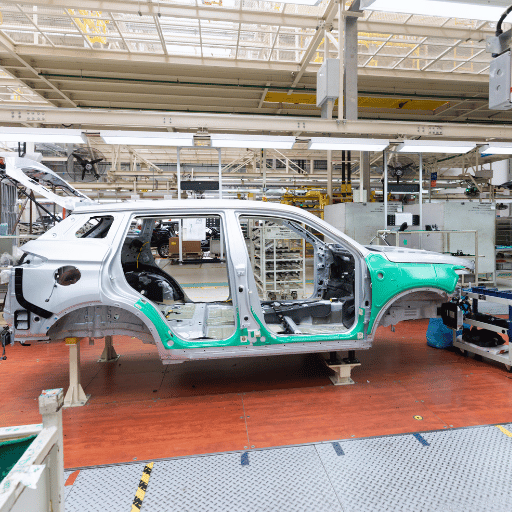
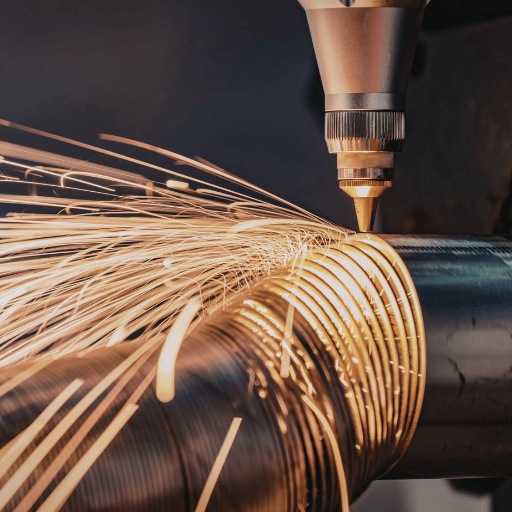
Precision, repeatable centerlines and neat holes for body panels, chassis components, exhaust systems, battery trays, structural brackets etc. For high volume production of automotive sheet metal parts, the tight tolerances and swift material handling are demanded. Carbon steel and aluminum are the materials of choice.
Signage & Metal Art
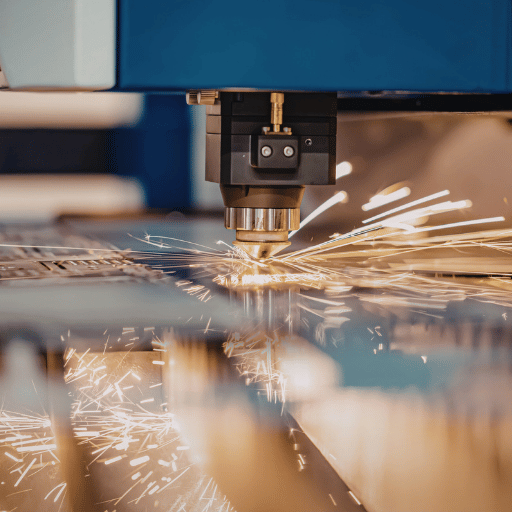
Most intricate market such as decorative panels, channel letters, architectural screens, décor installed in buildings and custom-designed art. Industrial laser cutting ensures complex geometry, high-quality edges, even in stainless steel, copper, brass and exotic alloys. Titanium and thin sheeting below 2mm can also be laser cut without warping and warping.
HVAC & Construction
Any virtually leak proof manufacturing applications such as ducting, ventilation, structural brackets, roofs and cladding. These sheet metal laser cutters outpace plasma and mechanical shearing in terms of velocity and capacity of the cutting process, while maintaining the edge requirements for bendand-fold.

Aerospace & Defense
Pin-point precision for delicate aerospace components, fine gauge titanium parts, heat shields, instrument panels etc. EETO can guarantee position accuracies to 0.03mm with their high precision fiber laser cutters.
General Metal Fabrication
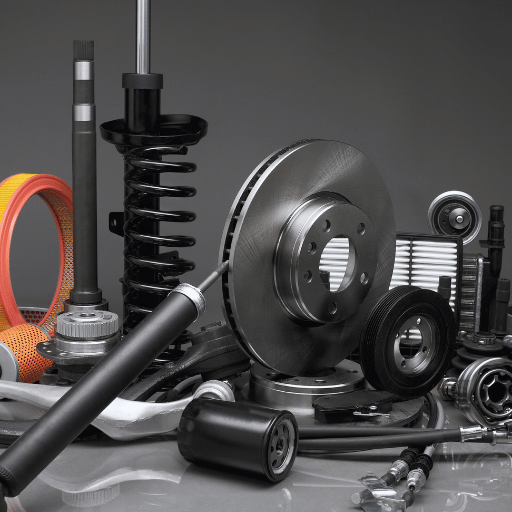
Enclosures, brackets, metal components, car body parts, motorcycle parts. Job shops depend heavily on fiber laser cutting machines which are the only tool needed for a job of carbon steel, stainless, aluminum, copper and brass without tooling changes.
Material-to-Industry Application Map
| Material | Typical Thickness | Primary Industries | Common Parts |
|---|---|---|---|
| Carbon Steel | 1–40mm | Automotive, Construction, Shipbuilding | Structural frames, chassis, heavy plate |
| Stainless Steel | 0.5–30mm | Food/Medical Equipment, Architecture | Enclosures, kitchen equipment, facades |
| Aluminum | 0.5–18mm | Automotive, Aerospace, Electronics | EV battery trays, aircraft skin, heat sinks |
| Copper | 0.5–12mm | Electronics, Electrical, Decoration | Bus bars, connectors, decorative panels |
| Brass | 0.5–12mm | Plumbing, Hardware, Signage | Fittings, nameplates, ornamental pieces |
Once processed, your materials that you laser cut continue directly to downstream processing-bending, welding, powder coating or assembly-which is why edge quality can be just as critical as cutting speed. By providing a clean, oxide free edge on stainless steel using Nitrogen assist, fiber laser can eliminate a whole step of deburring. On thicker carbon steel, a slight bevel angle created by the laser kerf-a familiarity of experienced fabricators-builds weld penetration.
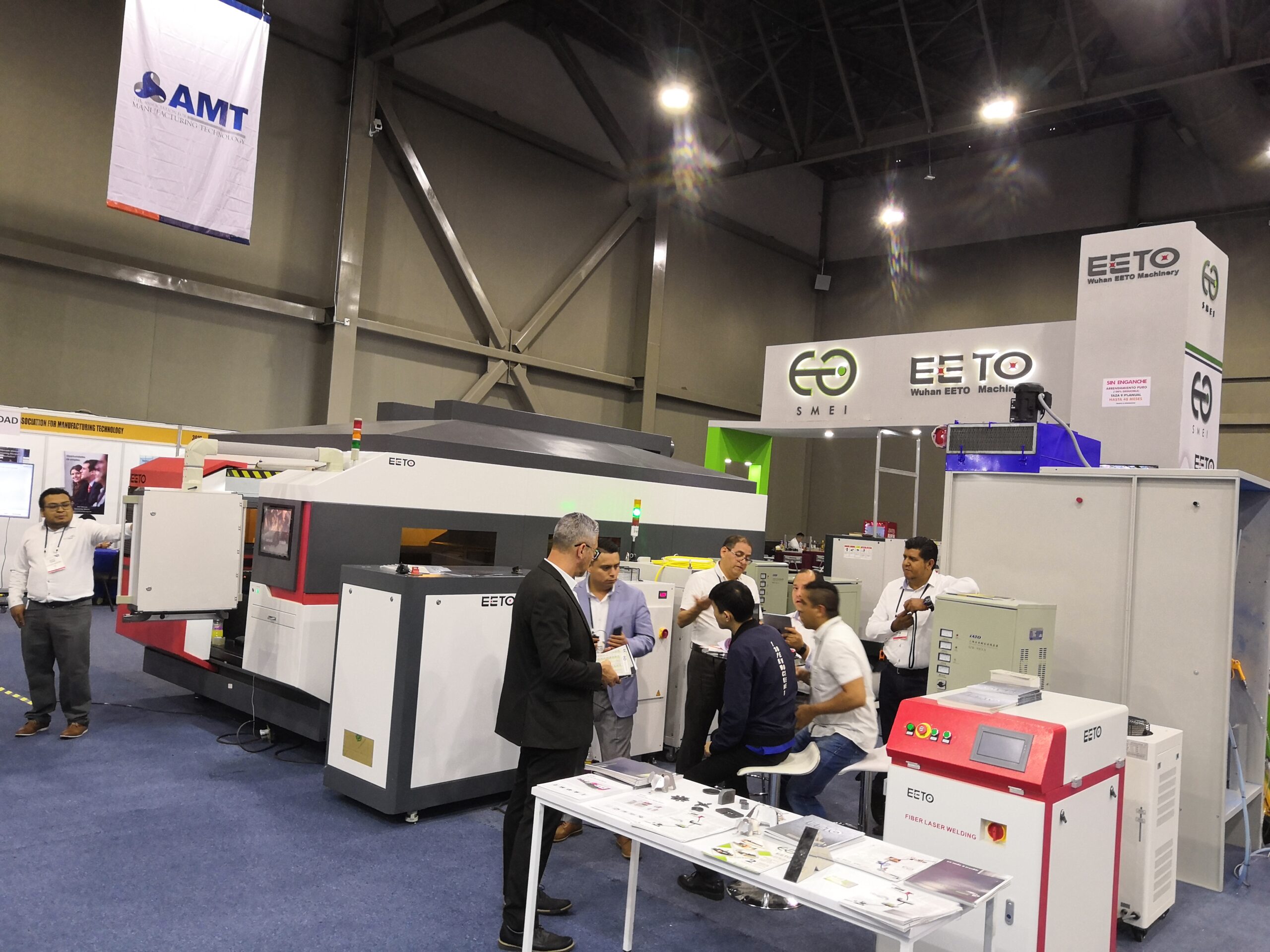
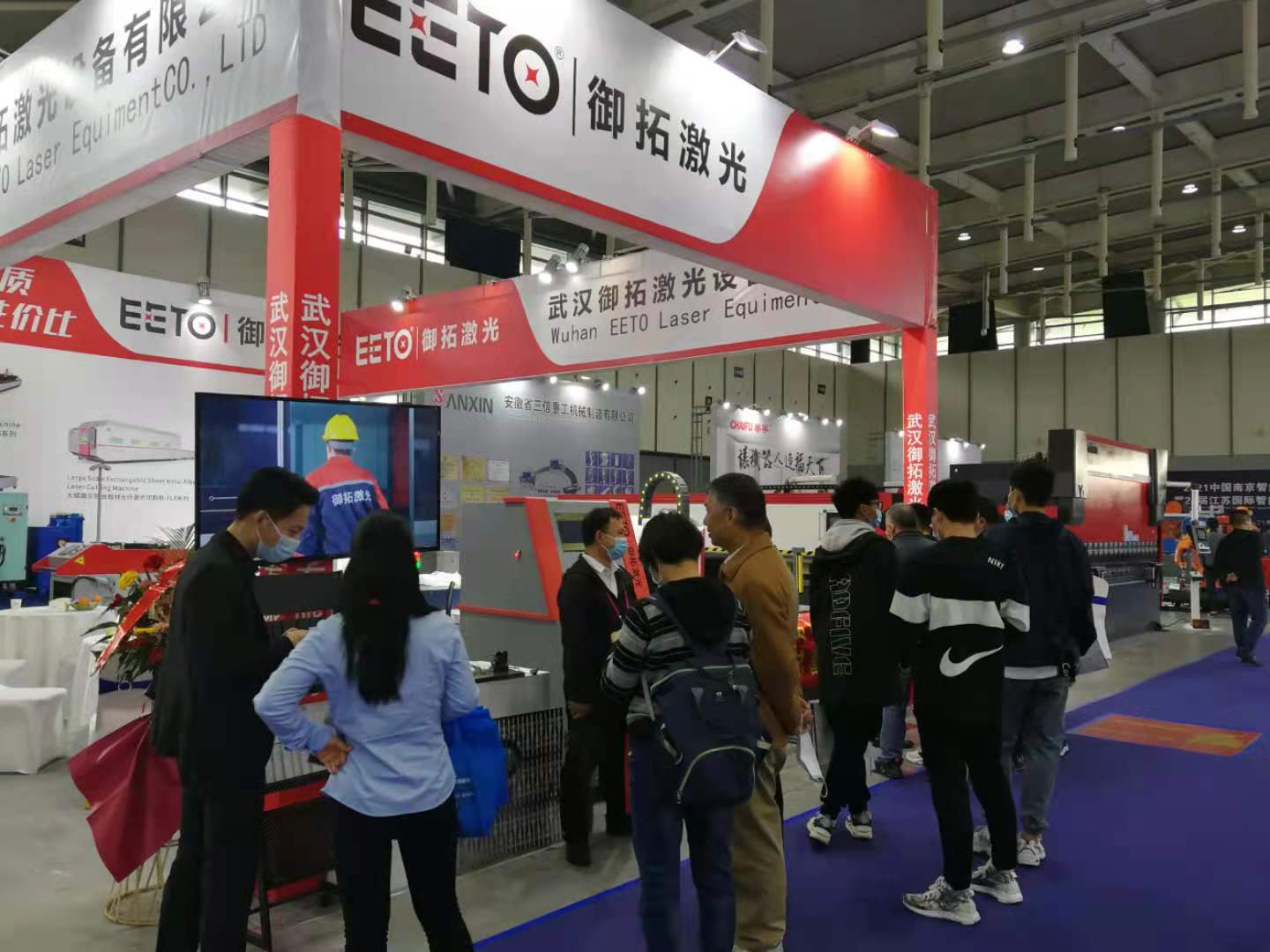
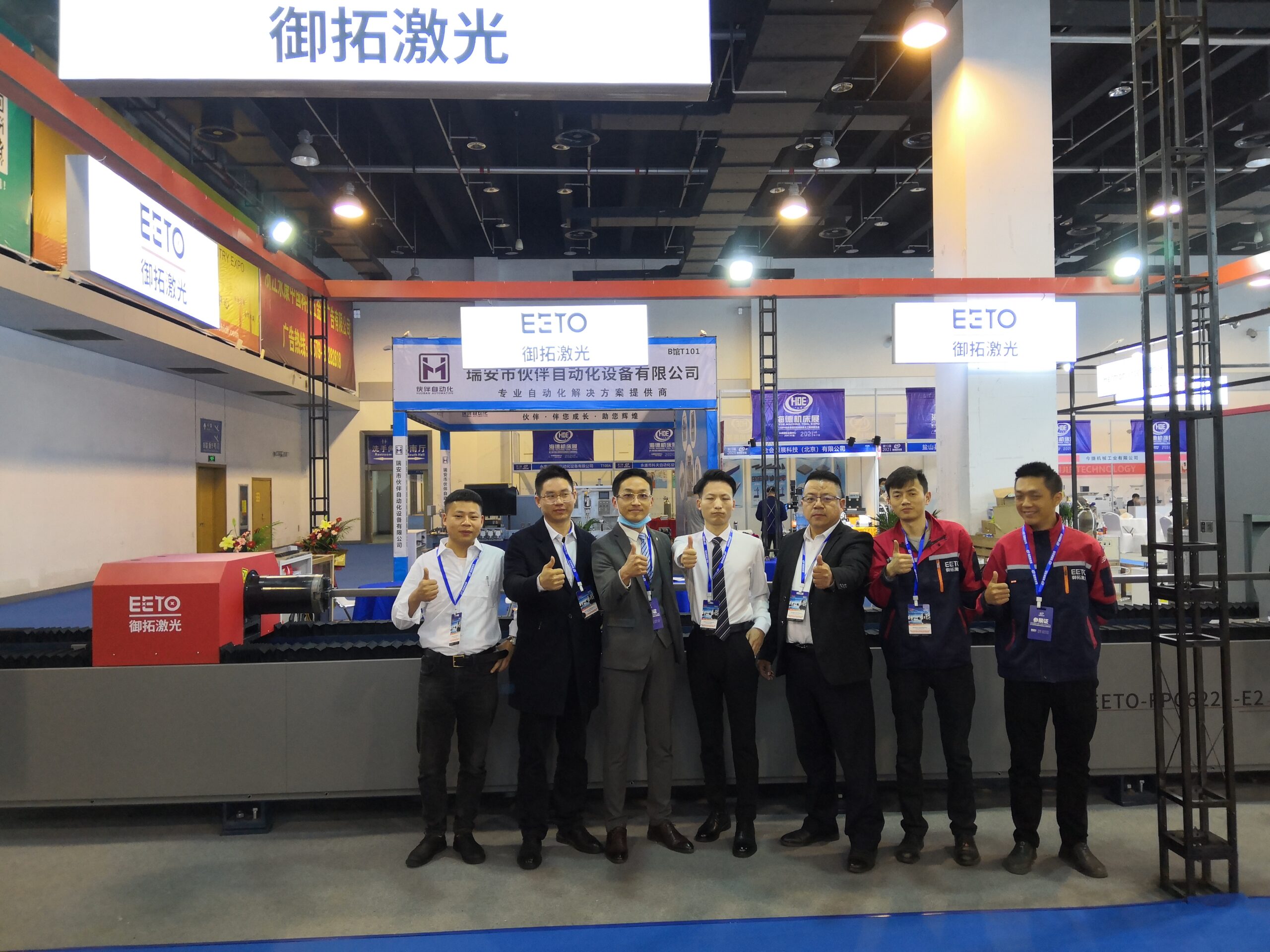
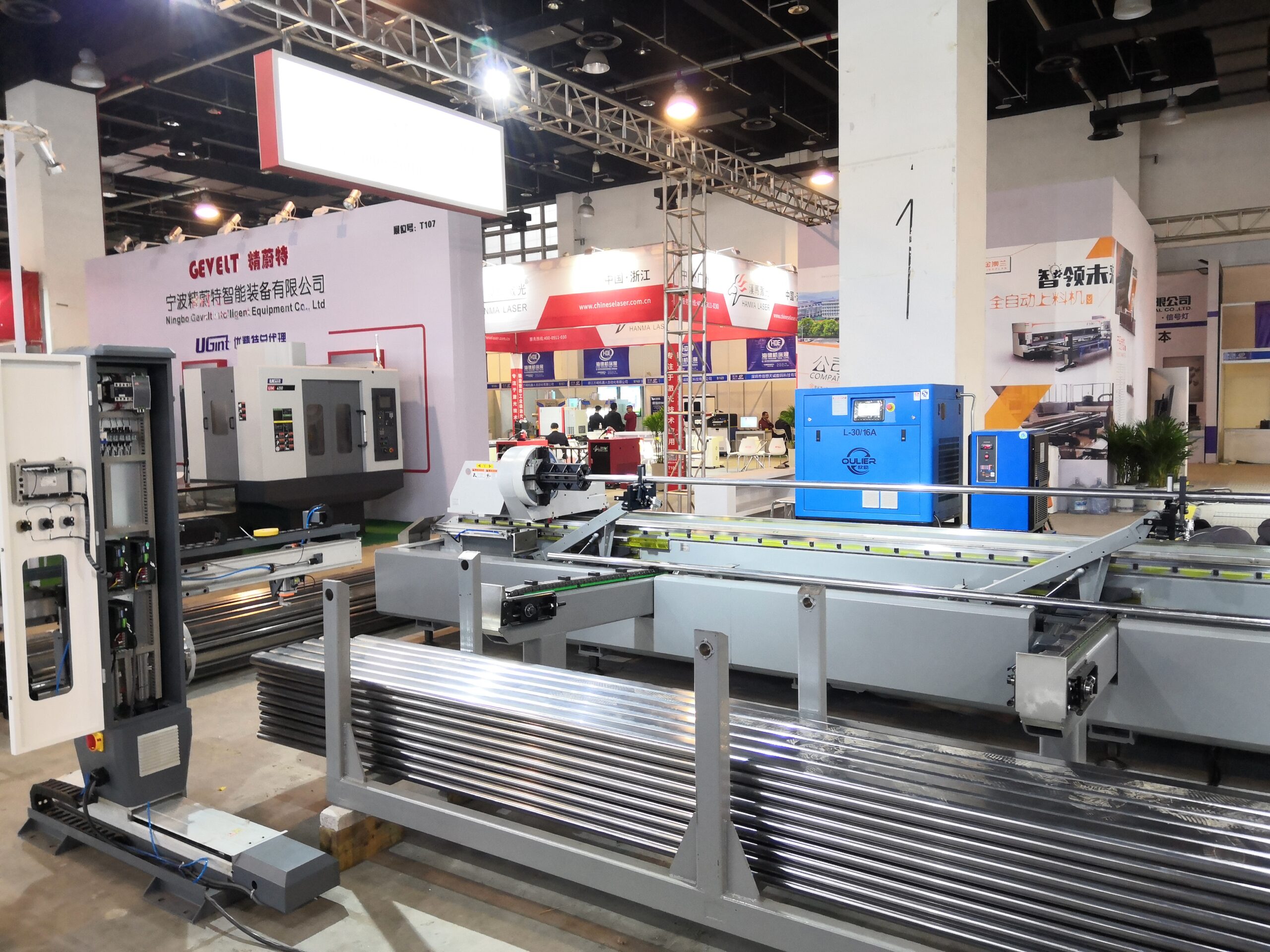
Global Footprint & Facility Showcase
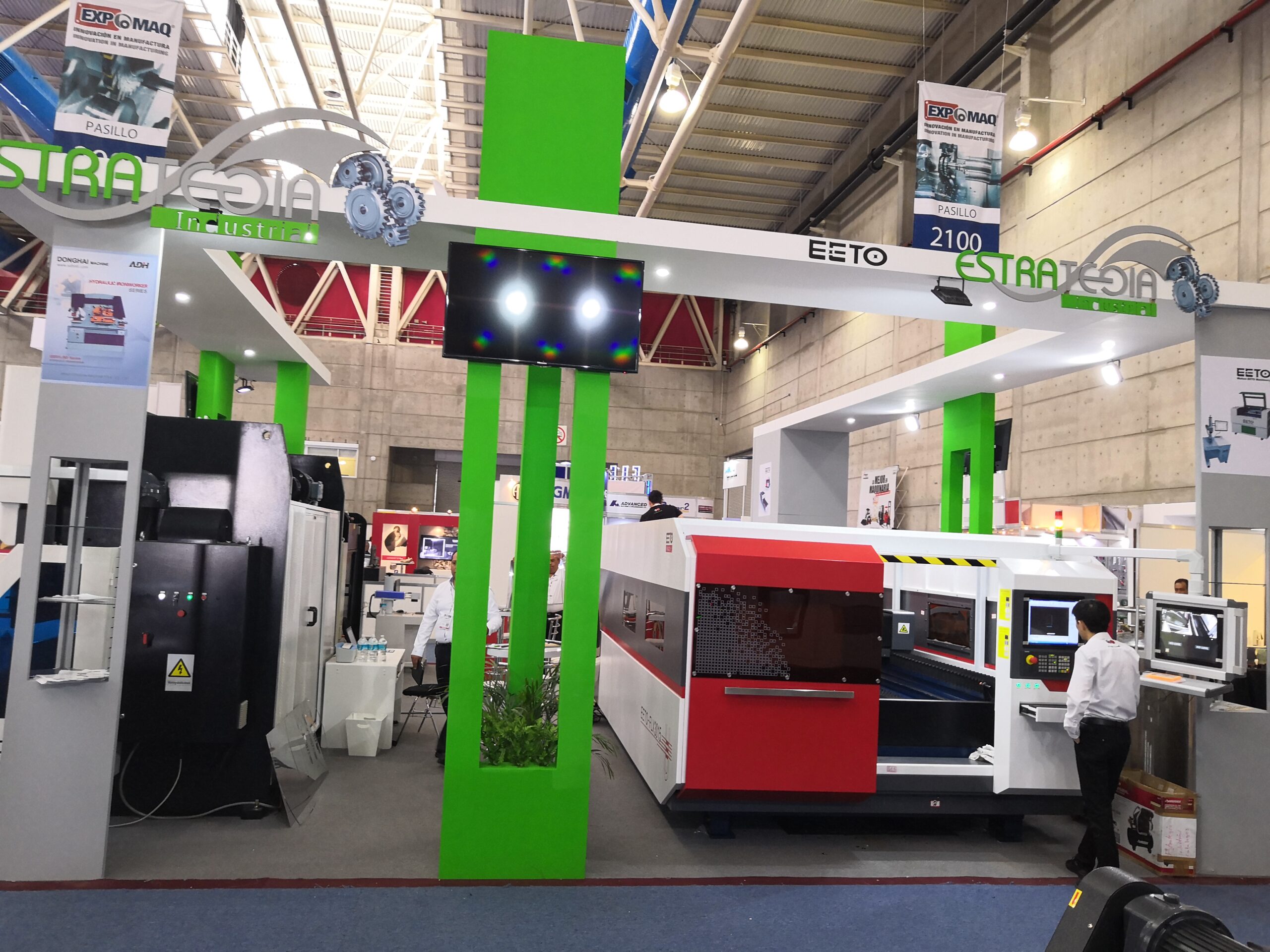
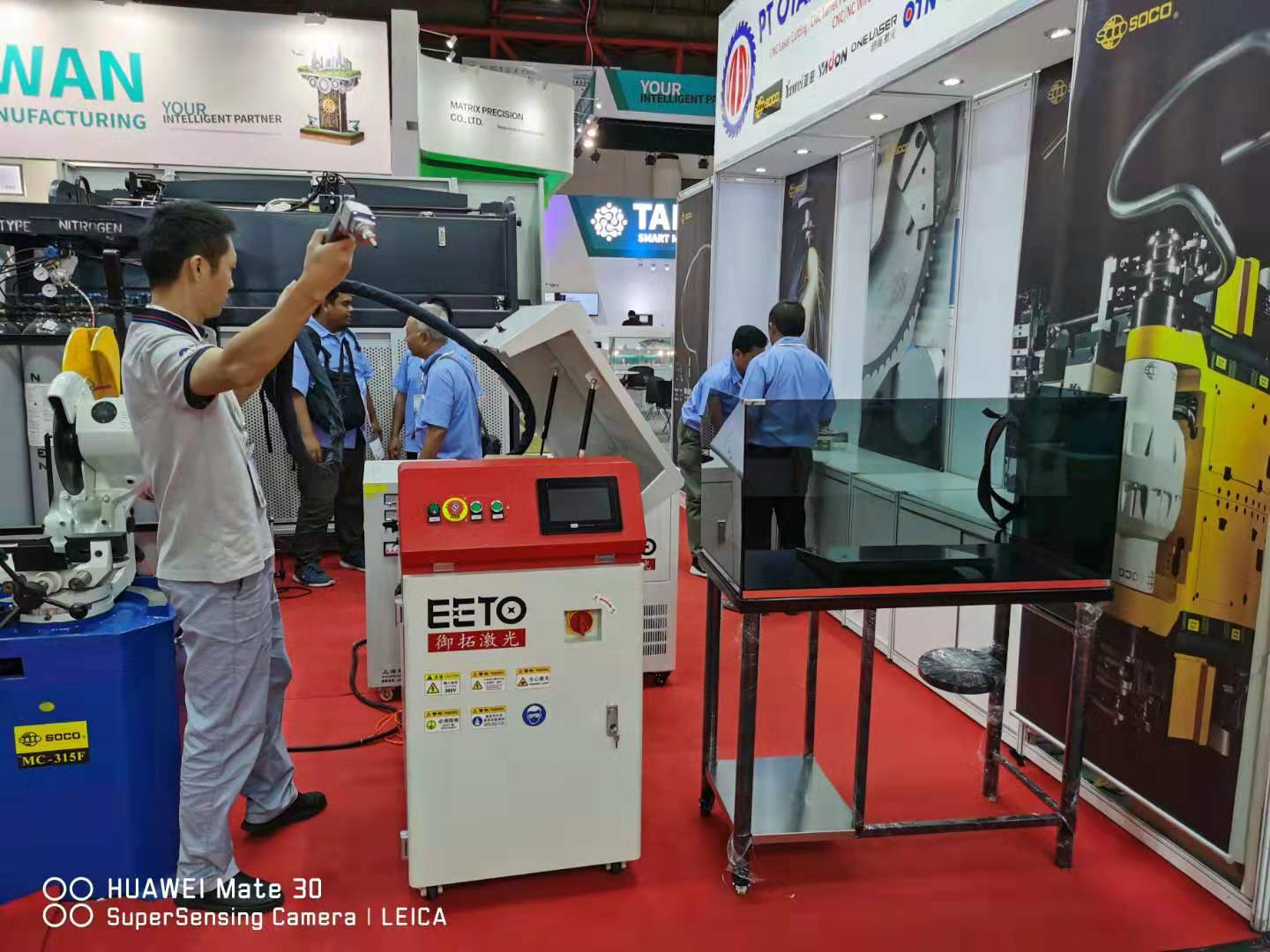
Witness our sheet metal laser cutters delivering precision and productivity in manufacturing plants and exhibitions worldwide.


Key Features — Why Choose EETO Fiber Laser Cutters
01
EtherCAT Bus Control System
EETO FLS and FLX series cutting machines use EtherCAT real-time industrial bus communication has true response times on a nanosecond cycle that are ~10x faster than traditional pulse control and direct impact in smoother motion paths, enhanced corner handling at high speeds, and tighter position accuracy on complex contour cuts. The bus architecture also insures easier diagnostics-every axis reports its status in real time.
02
BOCI BLT Cutting Heads
The BOCI BLT series cutting head has auto focus adjustment, water cooled beam path that covers 90% of the beam delivery system, anti-collision protection with capacitive height sensing, and intelligent piercing sensing. Water cooling prolongs lens life and disperses heat on continuous cuts on thick material where heat distortion of an air-cooled head can impact beam integrity.
03
Premium Laser Sources
EETO has multiple laser source brands- Raycus, IPG, Maxphotonics, and BWT-to help match source to application and budget considerations. IPG sources deliver superior beam quality for cutting reflective metals, like copper and brass. Raycus provides a solid entry point to the most cost effective cost-performance source for standard carbon and stainless steel work. All sources are designed to operate seamlessly from our control platform.
04
YASKAWA Servo Motors
Japanese-manufactured YASKAWA servo drives bring the high speed positioning and dynamic response required to achieve 120m/min travel speed and acceleration to 1.2G. Factory-optimized servo tuning for each configuration extracts the limitless high speed potential without exposing the beam to unintended vibrations or de-tuning. It is this precision that is critical to delivering 0.03mm accuracy for a full working area.
05
Precision Machine Body Construction
Every EETO machine body has a 600C stress-relief annealing for 12 hours to eliminate welding distortion, followed by 5-axis gantry milling to 0.02mm tolerance. This two-step process guarantees the bed will retain its original geometric dimension throughout years of production without drift. This type of foundation investment differentiates an accurate metal cutting machine from just an assembled frame and bolted-on rails.
06
Separated Cabinet Design
The control electrical cabinet is physically separated from the machine body and fed with industrial cable loom. Separating out sensitive control components-the CNC controller, servo drives, and fiber laser source interface-reduces heat, vibration, and abrasive airborne dust to prolong lifetime and reduce nuisance faults. This arrangement makes for more consistent performance in a multiple machine operation.
Case Studies & Project References

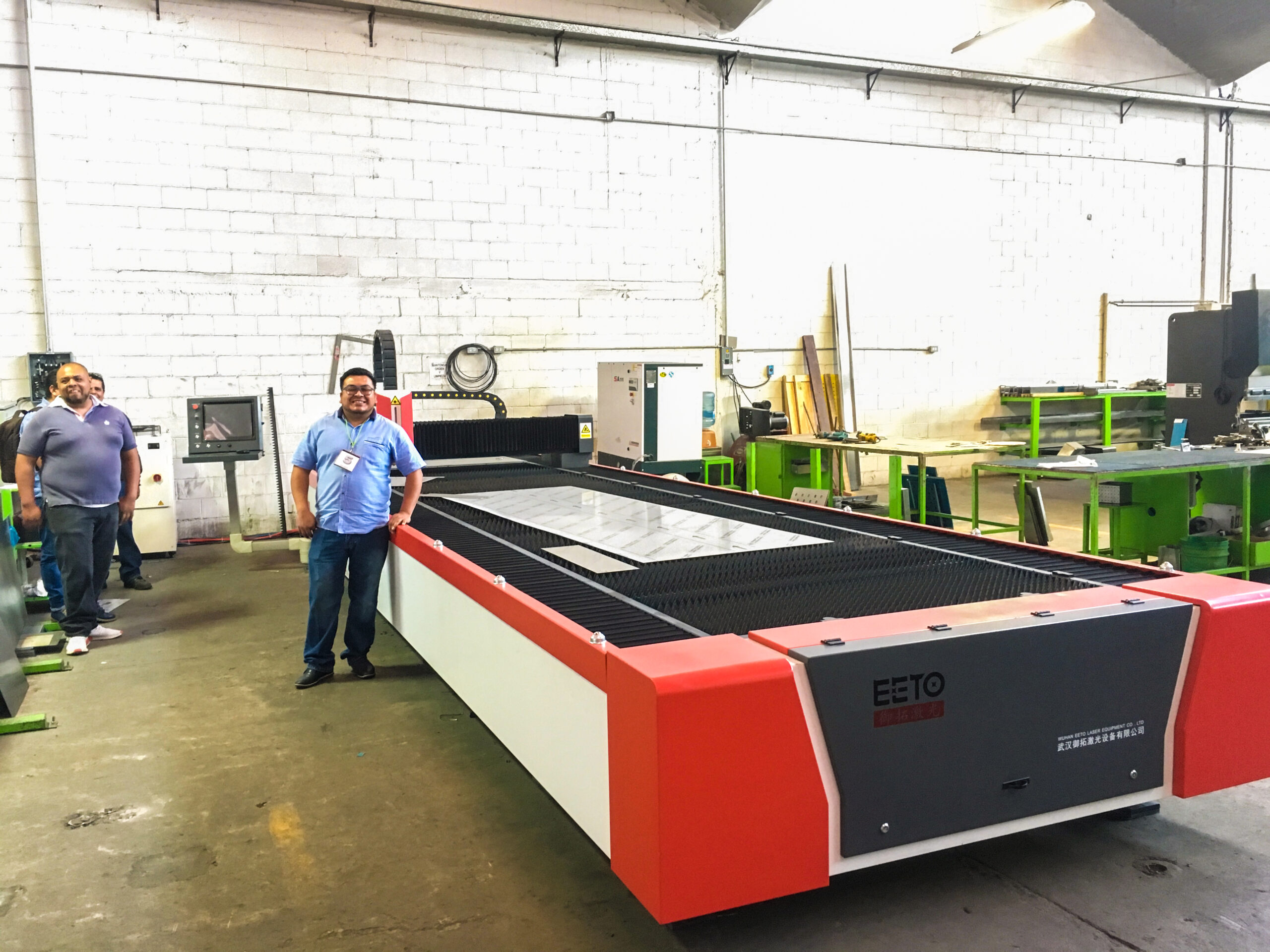

Case Study 01 — Automotive Parts Manufacturer, Southeast Asia
FLS-6020 12kW Delivers 35% Throughput Increase for Auto Parts Production
A Tier-2 automotive parts supplier in Southeast Asia had three plasma table and were having difficulty fulfilling delivery schedules for stamped and laser cut chassis brackets and exhaust components. Their main pain points were slow cutting speeds on 8-12mm carbon steel and the long amount of time for deburring after plasma cutting.
By installing an EETO FLS-6020 with 12kW Raycus source, the facility was able to consolidate two of the three plasma tables. They also increased throughput 35% on their core product mix. Position accuracy of 0.05mm on production parts removed secondary grinding of bracket mounting holes, removing an entire workstation from the line. Switching from plasma to fiber laser also cut assist gas use nitrogen for stainless components and oxygen for carbon steel by ~$12,000 per year in gas costs.
35%
Throughput Increase
±0.05mm
Production Accuracy
$12,000/yr
Gas Cost Savings
FLS-6020
12kW Raycus

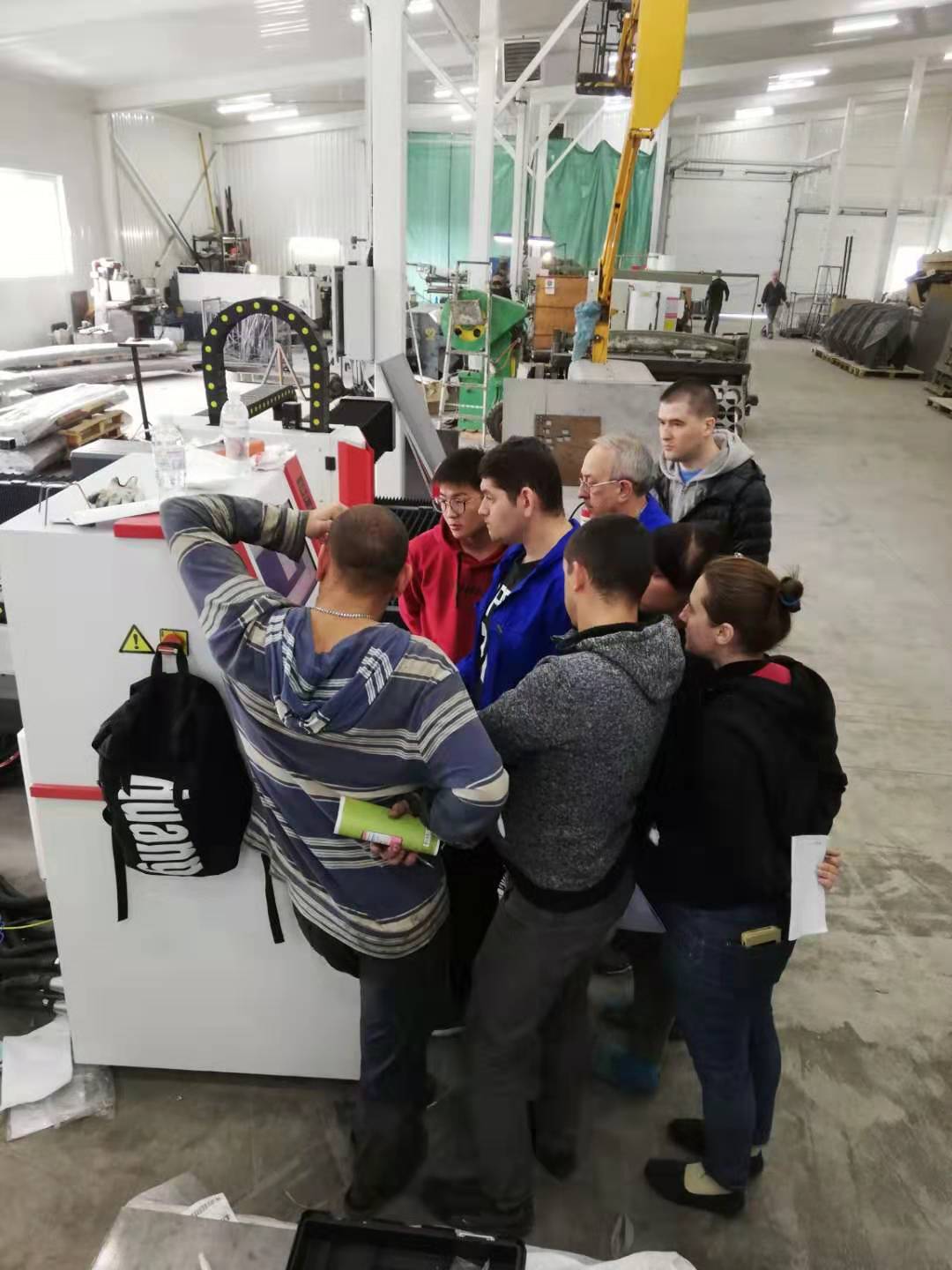

Case Study 02 — Sheet Metal Service Provider, Middle East
FLX-GII 6kW: CE-Certified Enclosed Machine Passes Local Safety Audit on First Inspection
| Parameter | Before (Competitor Machine) | After (EETO FLX-GII 6kW) |
|---|---|---|
| Material Changeover Time | 12 minutes | 7 minutes (−40%) |
| Safety Certification | Failed 2 items | Passed first inspection |
| Enclosure Type | Partial guards | Full CE-certified enclosure |
| Daily Throughput (8mm CS) | ~180 sheets | ~230 sheets |
| Cutting Head | Third-party generic | Precitec Pro-cutter |
| Laser Source | Raycus 4kW | IPG 6kW |
| Control System | Pulse / Step-direction | Beckhoff EtherCAT |
It was the dual-exchange table concept that made the customer really select this machine. Loading and unloading one table while the other was cutting speed up non-cutting time saving by 40%. Fully enclosed structure on CE complying product enabled the machine to pass the local industrial safety inspection on the first time-previous open type machine failed twice.


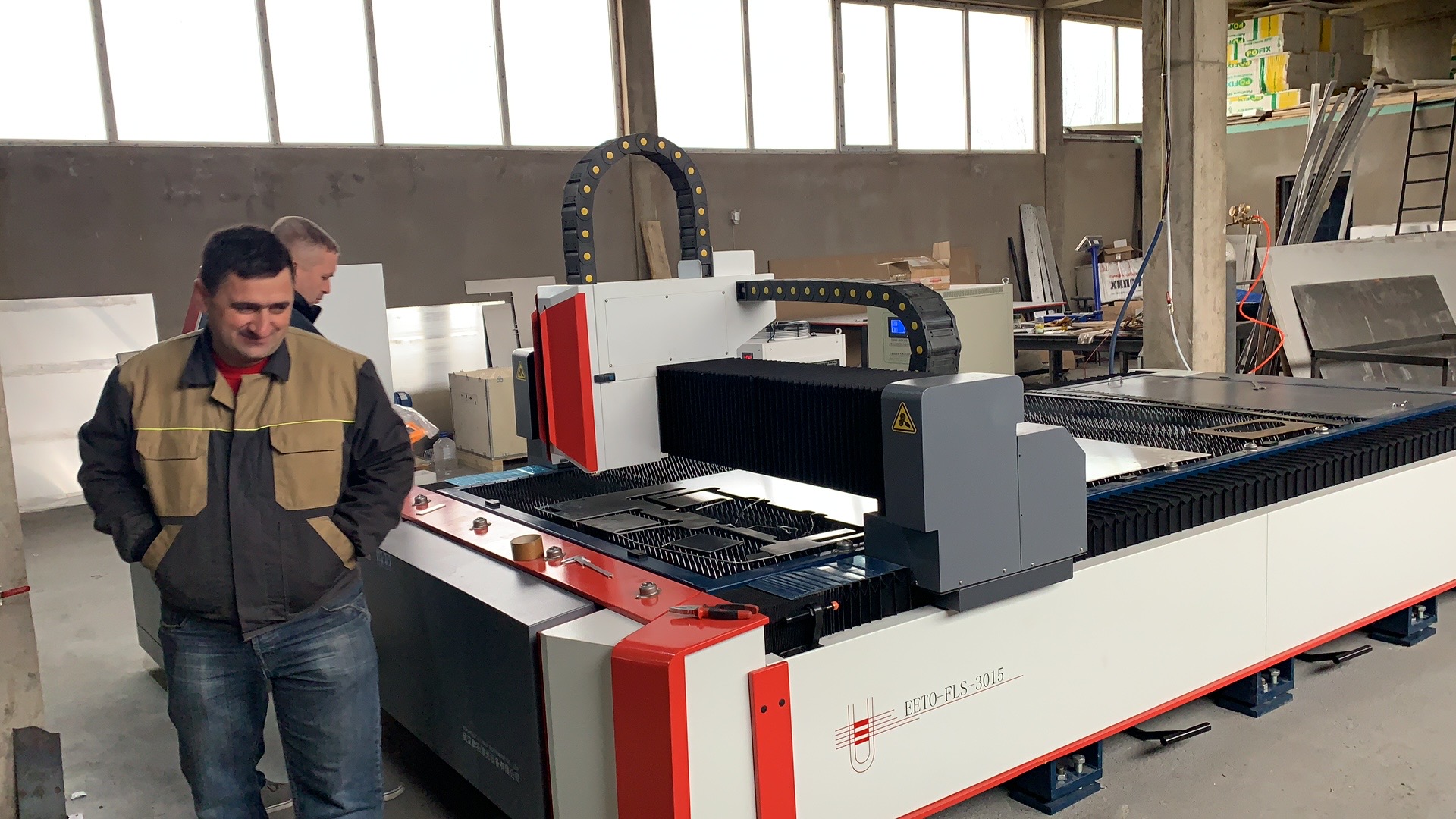
Case Study 03 — Signage Company, South America
FIT 3kW: Budget-Friendly Fiber Laser Pays for Itself in 6 Months
“We looked at five different metal laser cutters in our price range. The EETO FIT gave us the cutting precision we needed for channel letters and decorative panels at roughly 30% less than the next comparable machine. Six months in, the machine had paid for itself through work we previously outsourced.”
This signage and metal art printer was currently sending all fiber laser cutting work to a local service bureau on a per sheet basis, which accounted for 40% of their gross margin on decorative metalwork. Replaced with an EETO FIT 3kW they now can handle all fiber laser cutting themselves, cutting stainless to 8mm and aluminum to 5mm for channel letters, architectural screens and custom metal artwork. Its small single-table footprint fit into the existing 200m2 workshop, requiring no capital expenditure or workshop modifications. Break-even was 6 months, driven by savings from outsourcing and drastic reduction in lead times from 10 to same day on standard jobs.
6 Months
ROI Payback
40%
Margin Recovered
10 → 1 Day
Lead Time Reduction
Technical Specifications & Cutting Capacity
Detailed specifications of EETO’s FLS series-open type sheet metal laser cutter,our best seller and cutting capacity table.
FLS Series — Full Technical Specifications
| Specification | Value |
|---|---|
| Laser Power | 1.5kW – 20kW |
| Working Areas | 3050×1530 / 6050×2000 / 6050×2500 / 8050×2500 / 12000×2500mm |
| Position Accuracy | ±0.03mm |
| Repeatability | ±0.05mm |
| Max Travel Speed | 120 m/min |
| Max Acceleration | 1.2G |
| Control System | EtherCAT Bus |
| Laser Source Options | Raycus / IPG |
| Cutting Head | BOCI BLT (auto-focus, water cooled) |
| Servo Motors | YASKAWA |
| Power Supply | 380V AC 50/60Hz |
Cutting Capacity by Laser Power
The table below shows the maximum cutting thickness for the FLS series for four commonly used metals at each power level shown. This is the maximum physicsically possible thickness-for a production-quality edge at a steady pace is predicted at roughly 70-80% of this maximum thickness.
| Laser Power | Carbon Steel | Stainless Steel | Aluminum | Brass |
|---|---|---|---|---|
| 1.5kW | 12mm | 4mm | 3mm | 2mm |
| 2kW | 16mm | 6mm | 4mm | 3mm |
| 3kW | 16mm | 8mm | 5mm | 4mm |
| 6kW | 20mm | 16mm | 8mm | 6mm |
| 8kW | 22mm | 18mm | 10mm | 8mm |
| 12kW | 25mm | 20mm | 12mm | 10mm |
| 15kW | 30mm | 25mm | 16mm | 10mm |
| 20kW | 40mm | 30mm | 18mm | 12mm |
Note: Information from FLS series. Actual cutting performance depends on laser source, cutting head, parameters and assist gas. I V nitrogenrecommended for stainless steel and aluminium and I O oxygen for carbon steel.
Engineering Utility Hub
Precision calculators and planning tools designed to optimize your fiber laser cutting operations.
Finance
Operating Cost Estimator
Compute hourly running costs including power consumption, assist gas, and consumable wear for precise quoting.
Calculate Now
Production
Laser Power Selector
Select your material, maximum thickness, and production priority to find the optimal fiber laser power.
Access Tool
Investment
Model Comparison Tool
Select 2 or 3 EETO machine models to compare specifications, features, and price ranges side by side.
Start Selection
Frequently Asked Questions
With a 20kW source, a fiber laser cutting machine can get through 40mm carbon steel and 30mm stainless. The power-to-thickness rule of thumb: 1.5kW handles 12mm carbon steel, 6kW reaches 20mm, 12kW does 25mm. Always check your production-quality cutting speed at the thickness you actually need, not the maximum rated depth.
A 1kW fiber laser cuts carbon steel up to about 10mm, stainless steel to 4mm, aluminum to 3mm, and brass or copper to around 2mm. This power level works well for signage, decorative panels, electrical enclosures, and small metal parts. For reliable production-speed results, stick to material under 6mm carbon steel.
1500 watt (1.5kW) fiber laser cutting machine is capable of cutting down to around 12mm of carbon steel (based on grade and finish), around 4mm of stainless, down to around 3mm of aluminum, and around 2mm of brass. To be able to produce your production-quality finished part at full speed, expect to cut at, say, 70-80% of the maximum rated thickness a fiber laser can cut. Using oxygen as the assist gas when laser cutting mild steel will result in faster cutting speeds, and using nitrogen will give an oxide-free edge on stainless-steel (an important consideration if the part is to be welded or powder coated downstream). The 1.5kW power level remains one of the most popular entry-points for small shop, inexpensive fiber lasers installed for metal cutting.
Yes. Fiber laser cutting machines are built for exactly this job. They cut carbon steel, stainless, aluminum, brass, copper, and titanium sheet with ±0.03mm accuracy and burr-free edges that usually need no secondary finishing.
Fiber laser cutting machine is an industrial CNC metal cutting equipment using a fiber optic laser source that generates a powerful beam to perform exact metal cutting. The term fiber refers to the rare-earth doped optical fiber that generates and transmits the laser beam, unlike CO2 lasers that use gas tubes and mirror alignments. Some of the main benefits of a fiber laser cutter include 30-35% electrical efficiency (compared to 10-15% for gas lasers), virtually no optical path maintenance and very high performance levels when cutting reflective metals such as copper or aluminium, diode lifespan in excess of 100,000 hours. They have become the default in sheet metal fabrication today.