Get in Touch with EETO


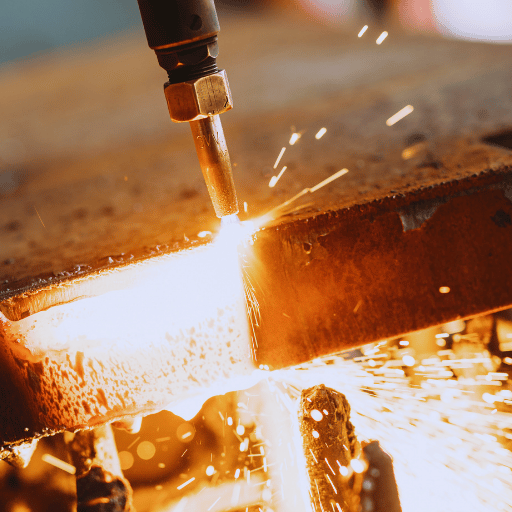
Choosing the wrong assist gas for your laser cutting machine will cost you dollars in two ways: wasted gas and ruined parts. Nitrogen, oxygen, and compressed air all have different roles in the cutting process; the optimal choice depends on your material, thickness, edge condition requirements, and budget. This article explains exactly when to select nitrogen or oxygen, what purity and pressure range to set for maximum efficiency, and how to procure your gas at a minimum dollar cost per cut.
Whether you operate a fiber laser cutting machine for stainless steel fabrication or a CO2 laser for mixed-metal job shops, the assist gas in laser cutting directly affects your edge quality, cutting speed, and operating economy. Below, we compare nitrogen, oxygen, and air side by side – supported by published research and practical consumption figures – so you can evaluate the assist gas options for your cutting application.
What Is Assist Gas and Why Does It Matter?
An assist gas is a pressurized gas stream delivered coaxially through the cutting head alongside the laser beam. During the laser cutting process, the beam melts or vaporizes the material while the assist gas blows molten metal out of the kerf – the narrow slot left by the cut. Without sufficient gas flow, molten material re-solidifies on the cut edge, creating dross (hardened slag) that requires grinding or secondary finishing.
The three commonly used assist gases in laser cutting are nitrogen, oxygen, and compressed air. Each interacts differently with the workpiece:
- Nitrogen (N₂) – an inert gas that shields the cut zone from oxidation, resulting in a clean, oxide-free edge.
- Oxygen (O₂) – a reactive gas that initiates an exothermic reaction with carbon steel, providing additional thermal energy and boosting cutting speed.
- Compressed air – a cost-effective mixture (~78% nitrogen, ~21% oxygen) suitable for non-critical cuts where edge aesthetics are less important.
Based on a peer-reviewed publication in Materials (MDPI), “Laser Cutting: A Review on the Influence of Assist Gas”, the aerodynamic coupling between the assist gas jet and the workpiece significantly influences cut performance, kerf width, and the attainable cutting speed. Gas pressure, purity, and nozzle shape all contribute to how effectively molten material is expelled from the cut zone.
💡 Key Takeaway
The assist gas does more than remove debris – it directly manages oxidation, heat flow, and work-piece metallurgy. Selecting the proper assist gas is just as critical as determining the correct laser power for your work.
Nitrogen Cutting — When Clean Edges Are Non-Negotiable
Nitrogen laser cutting employs high-purity nitrogen gas to produce oxide-free, weld-ready edges on stainless steel, aluminum, and other metals where cosmetic appearance or downstream processing matters. Since nitrogen is inert, it reacts with neither surrounding air nor the workpiece during the cutting process. This results in a bright, reflective edge suitable for welding, powder coating, or visible architectural applications without additional cleaning.
Purity Requirements for Nitrogen Gas
Nitrogen purity directly influences the edge quality. Even tiny traces of residual oxygen cause stainless steel cut edges to take on yellow or blue hues. Industry grading relies on the number of “nines” in purity percentage:
| Grade | Purity | Typical Use | Edge Result |
|---|---|---|---|
| N₂ 3.0 | 99.9% | Non-critical mild steel | Slight discoloration possible |
| N₂ 4.5 | 99.995% | Standard stainless/aluminum | Clean, weld-ready |
| N₂ 5.0 | 99.999% | Precision / medical-grade | Impurity-free, mirror-bright |
Most fabrication shops specify N₂ 4.5 (99.995%) as the standard for using nitrogen on stainless steel and aluminum. Dropping below 99.95% often introduces enough residual oxygen to cause visible edge discoloration, according to The Fabricator’s guide to perfecting fiber laser cut edges.
Pressure and Nitrogen Consumption
Nitrogen cutting demands far greater gas pressure than oxygen cutting; 8-20 bar (116-290 PSI) depending on the material and thickness. Stainless steel generally takes 8-14 bar; it is not unusual for aluminum to demand 14-20 bar in order to sustain the heat flow because of its higher thermal conductivity. High power 10-kW fiber laser systems and above may call for inlet pressures of 300-400 PSI in order to keep cut quality stable on thick sections.
A 2 kW fiber laser cutting machine burns through about 20-40 Nm³/hour of nitrogen gas; a 12 kW system cutting 20 millimeter stainless steel uses roughly 18 m³/hour at a 1.2 m/min feed rate. Nitrogen consumption increases rapidly with the increase in nozzle diameter – because the flow rate is proportional to the square of the diameter, even a modest nozzle upgrade can double your gas consumption.
99.995%
Standard N₂ Purity
8–20 bar
Pressure Range
20–40 Nm³/h
Consumption (2 kW)
“Here at EETO, our applications engineers always suggest starting with N₂ 4.5 grade for stainless steels. The only situation where the step up to 5.0 seems to provide better economics is when machining for medical applications or food processing equipment that requires a food grade surface.”
— EETO Technical Team
💡 Key Takeaway
Nitrogen offers the best edge quality on stainless steel and aluminum but commands higher prices because of its need for higher pressure and purity. Use it when your parts are headed straight to welding, powder coating, or assembly without grinding.
Oxygen Cutting — Faster Speeds on Carbon and Mild Steel

When using oxygen as the assist gas, it combines with carbon steel in an exothermic reaction that liberates additional energy at the cut zone. The extra thermal energy contributes to the laser beam, allowing for faster cutting speeds and better penetrating thicknesses of carbon steel – as much as 25 millimeters and more on high powered fiber laser systems. Oxygen is used as the standard for cutting mild steel, low-alloy steel and carbon steels in mass production, where speed is king over edge cosmetics.
How the Exothermic Reaction Works
The laser beam heats up the steel until it ignites (~ 1,100 Celsius for mild steel). When oxygen strikes the hot steel, the reaction (2Fe + O₂ → 2FeO) releases approximately 3.7 MJ/kg. This exothermic boost means the laser does less work – oxygen has become a secondary energy source. However there is a penalty: oxygen reacts with the cut surface creating an iron-oxide layer on the edge, this layer appears as a dark, rough coating that must be removed before painting or welding in many applications.
Speed Advantage and Limitations
For thin carbon steel (under 3 mm), oxygen cutting speeds can be faster by up to 30% compared to nitrogen on the same material. However, as indicated by The Fabricator’s report on assist gas technology, at thicknesses greater than roughly 3 mm (1/8 in.), the overall speed difference between oxygen and nitrogen drops significantly. On sections of more than 12 mm thick, several shops now use nitrogen cutting even for mild steel, because the oxide-free edge removes downstream grinding costs.
| Factor | Oxygen Cutting | Nitrogen Cutting |
|---|---|---|
| Best for | Carbon steel, mild steel | Stainless steel, aluminum |
| Edge quality | Oxide layer (dark, rough) | Oxide-free (bright, clean) |
| Speed (thin CS) | Up to 30% faster | Baseline |
| Pressure | 1–6 bar (15–87 PSI) | 8–20 bar (116–290 PSI) |
| Gas cost | Lower (less pressure, less volume) | Higher (high pressure + purity) |
| Post-processing | Grinding or pickling often required | Typically none |
Oxygen is at a lower pressure (1-6 bar) than the nitrogen (sets it further down the pressure/flow range), but the purity of the oxygen assist gas still matters: oxygen below 99.5% reduces the exothermic cutting efficiency, making cuts slower and producing more dross. Most gas suppliers deliver cutting-grade oxygen at 99.5-99.7%.
⚠️ Common Mistake
Most operators will run with oxygen for all steels. While it is possible to use oxygen on stainless steel, it deposits a heavy oxide layer which will change the color of the surface and may reduce corrosion resistance. Use oxygen cutting only on carbon steel and mild steel.
💡 Key Takeaway
Oxygen remains the most cost-effective assist gas for cutting mild steel below 12 mm due to the exothermic speed boost, but above 12 mm most fabricators switch to straight nitrogen, removing the grinding stage which usually costs more than the saving in gas.
Compressed Air and Shop Air — The Budget-Friendly Alternative

Compressed air is also a commonly used assist gas and it has become popular with the advent of high powered fiber laser cutting machines (6 kW+). Shop air is simply a gas mixture of roughly 78% nitrogen and 21% oxygen with traces of argon and CO2, so air cutting produces a mildly exothermic reaction due to the oxygen while still providing some inert shielding from the nitrogen – landing somewhere between pure nitrogen and pure oxygen in terms of both edge quality and speed.
Cost Savings: Air vs. Nitrogen and Oxygen
Cost is the biggest advantage of air cutting. Testing quoted by The Fabricator shows that the hourly gas cost of running a fiber laser on compressed air is roughly 80% less expensive than nitrogen. Once you install an industrial air compressor and set up a suitable filtration/drying system, the only ongoing expense is the electricity cost – no gas supplier deliveries, no tank rental fees, no purity surcharges.
Edge Quality Trade-Off
Air assist is not equivalent to nitrogen on edge quality. Industry tests rate air cut edge quality around 8/10 versus the 10/10 found with nitrogen. Cut edges on carbon steel often exhibit a grayish discoloration due to the oxygen content in the air.
On very thin stainless steel, air can also be used to produce a usable edge although it is not bright silver like with nitrogen.
Where Air Outperforms Nitrogen on Speed
Actually, air assist is faster than nitrogen on some thin materials. Following test results from The Fabricator:
- Mild steel 10 gauge (3.4 mm): air is approximately 3% faster than nitrogen
- Stainless steel 20 gauge-0.75 in.: air is approximately 22% faster
- Aluminum 0.032–0.190 in.: air is approximately 14% faster
These speed improvements are attributable to the partial exothermic reaction of the 21% oxygen in air, and the greater total flow rates achievable on a compressed air system. Notice the high flow rate available with air today.
⚠️ Air Quality Warning
Shop air is contaminated with moisture, oil, and particles that can damage the laser optics and affect cut quality. A multi-stage filtration train (coalescing filter activated carbon filter desiccant dryer) is required with all air-assist systems. Failure to remove moisture will lead to rust on carbon steel edges overnight, while oil residue will damage the cutting head lens and require intensive cleaning.
💡 Key Takeaway
For shops cutting thin carbon steel, non-critical stainless steel, or parts headed for painting, compressed air is the lowest cost of all assist gases. But consider investing in a proper air treatment system to avoid long term costs of ruined optics and discarded parts from contaminated shop air.
Nitrogen vs Oxygen vs Air — Side-by-Side Comparison
Below is a comparison of the three commonly used assist gases available in fiber laser cutting. Keep it handy while selecting the gas for your next job.
| Criteria | Nitrogen (N₂) | Oxygen (O₂) | Compressed Air |
|---|---|---|---|
| Best materials | Stainless steel, aluminum, titanium, copper | Carbon steel, mild steel | Thin carbon steel, non-critical stainless |
| Edge quality | Bright, oxide-free (10/10) | Dark oxide layer (6/10) | Grayish tint (8/10) |
| Cutting speed | Baseline | Up to 30% faster (thin CS) | 3–22% faster than N₂ (thin gauge) |
| Gas pressure | 8–20 bar (116–290 PSI) | 1–6 bar (15–87 PSI) | 6–14 bar (87–203 PSI) |
| Gas consumption | High (20–40 Nm³/h at 2 kW) | Low | Medium–High |
| Cost per hour | $$$ | $$ | $ (electricity only) |
| Purity required | ≥99.995% (N₂ 4.5) | ≥99.5% | Filtered, dried, oil-free |
| Post-processing | None (weld-ready) | Grinding / pickling | Light cleaning for paint |
| Max thickness | 25 mm+ (10 kW+) | 25 mm+ (exothermic boost) | ~12 mm (quality drops) |
Generally, fabricators will stock both nitrogen and oxygen. Run nitrogen on stainless and aluminum, then switch to cutting with oxygen for carbon steel production runs where depth of cut and productivity are the factors to adjust for. Conversely, shops with 10 kW or larger laser systems often run nitrogen even on cutting mild steel, as the oxide-free edge drives down secondary grinding labor costs, which often exceed the incremental gas expense.
“We advise our customers to run a simple test: cut 10 parts with oxygen and 10 parts with nitrogen, then add the total gas cost and post-processing labor for each batch. In most cases above 6 mm carbon steel, nitrogen wins on total cost per part even though the gas itself costs more.”
— EETO Applications Engineering
💡 Key Takeaway
No one gas is ideal for every application. Select the appropriate gas depending on the material of the part, thickness, and desired finish. Always keep nitrogen and oxygen in stock and consider compressed air for non-critical cutting jobs if cost reduction is the priority.
Gas Supply Options — Bulk Tanks, Cylinders, and On-Site Generators
How you source your nitrogen gas and oxygen is just as important as which gas you pick. Three mainstream delivery methods exist: pressure cylinders, liquid gas bulk tanks, and on-site nitrogen generators. Each has a different cost structure, and your daily volume of gas consumed will inform your choice.
| Supply Method | Best For | Cost Structure | Drawbacks |
|---|---|---|---|
| Cylinders | Low volume, backup supply | Highest cost per ft³, rental fees | Frequent changeovers, downtime |
| Bulk Tank (Liquid) | Medium–high volume | Lower per-ft³, delivery fees, vaporization loss | Supplier dependency, contracts, price fluctuation |
| N₂ Generator (PSA/Membrane) | High volume (>40 Nm³/day) | Electricity only after capital investment | $5,000–$400,000 upfront, maintenance |
On-Site Nitrogen Generators: The Break-Even Calculation
On-site nitrogen generators work by generating nitrogen on demand from ambient air using Pressure Swing Adsorption (PSA) or membrane technologies. As indicated by The Fabricator, shops with annual usage exceeding 40 Nm³/day of nitrogen typically recover their nitrogen generator system investment within 18-24 months of installation. The ongoing cost of on-site gas supply after the payback is 50-70% less than bulk liquid nitrogen delivery, because logistics of delivery trucks, tank rentals, vaporization losses, and wholesale margins are eliminated.
One trade-off: nitrogen generators commonly produce gas at 99.5-99.99% N₂. Achieving 99.999% (N₂ 5.0) with PSA technology requires far more air input and larger equipment, substantially adding to capital cost. For the majority of laser cutting applications 99.95-99.99% is suitable from a generator.
For oxygen, on-site generation is less prevalent in fabrication shops. Most facilities procure oxygen from bulk tanks or oxygen tanks through their gas supplier, as the loss of gas volume in laser cutting is not as high for oxygen as it is for nitrogen consumption.
Gas Supply Decision Framework
- Determine your daily nitrogen consumption in Nm³ (consult laser machine history or gas supplier invoices).
- If below 20 Nm³/day cylinders or small bulk tank will be most cost effective.
- If 20-40 Nm³/day obtain both bulk liquid nitrogen supply and an N₂ generator; compare total cost of ownership over 3 years.
- If above 40 Nm³/day a nitrogen generator almost certainly pays for itself in 2 years.
- Always maintain a small oxygen tank as a backup for carbon steel rush jobs regardless of your primary gas supply.
💡 Key Takeaway
In high-volume nitrogen cutting shops, on-site nitrogen generation pays for itself in less than 2 years and removes gas supplier dependency. In mixed-gas shops, a bulk gas tank for nitrogen combined with a cylinder manifold for oxygen is the most practical gas supply setup.
How to Choose the Right Assist Gas for Your Cutting Application
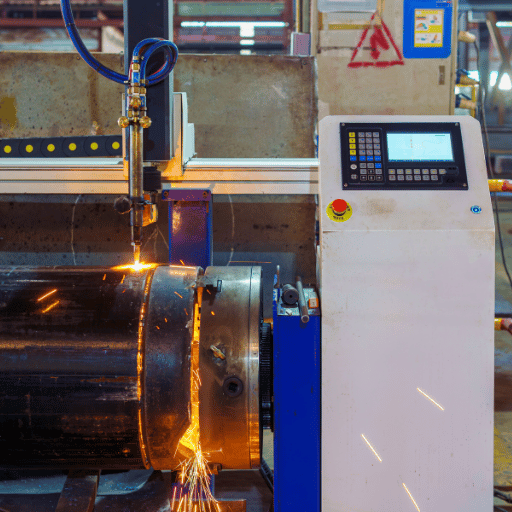
Selecting the ideal laser assist gas when cutting is determined by three variables: the type of material, the desired edge finish, and the total cost per part (gas + subsequent processing time). The following is a decision flow used in laser cutting:
- ✔
Step 1 — Identify the material. Stainless steel or aluminum → nitrogen. Carbon or mild steel → oxygen or air. Mixed metals in one shift → keep both gases available. - ✔
Step 2 — Define edge requirements. Weld-ready or visible edges → nitrogen only. Painted parts → air or oxygen acceptable. Structural/hidden parts → cheapest option (usually air). - ✔
Step 3 — Check material thickness. Thin carbon steel (<3 mm) → oxygen gives best speed. Thick carbon steel (>12 mm) → nitrogen may save total cost (no grinding). Thin stainless → air can work if finish is non-critical. - ✔
Step 4 — Match gas to your fiber laser cutting machine power level. High-powered fiber laser systems (10 kW+) can be used to cut thicker sections with nitrogen — making N₂ viable for materials that previously required oxygen. - ✔
Step 5 — Calculate total cost per part. Add gas cost + post-processing (grinding, cleaning, pickling). The cheapest gas is not always the cheapest cut.
Material → Gas Quick Reference
| Material | Recommended Gas | Notes |
|---|---|---|
| Stainless steel | Nitrogen (N₂ 4.5+) | Prevents chromium oxide, maintains corrosion resistance |
| Aluminum | Nitrogen (N₂ 4.5+) | High pressure needed (14–20 bar); prevents aluminum oxide |
| Mild steel (<3 mm) | Oxygen | Maximum cutting speed from exothermic reaction |
| Mild steel (3–12 mm) | Oxygen or Nitrogen | Oxygen for speed; nitrogen if edge must be weld-ready |
| Mild steel (>12 mm) | Nitrogen (high-powered laser) | Saves grinding cost; requires 10 kW+ laser power |
| Galvanized steel | Nitrogen or Air | Oxygen causes excessive zinc oxide fumes |
| Titanium | Nitrogen or Argon | Must prevent oxidation; argon for aerospace-grade cuts |
“The most common mistake we encounter is shops running a single gas for every type of job. A 20-kW fiber laser with both nitrogen and oxygen piped in provides the versatility to match the gas to the task – cutting costs on carbon steel and maintaining ideal edges on stainless steel. Dual gas delivery installation returns investment in just a few months.”
— EETO Laser Systems
💡 Key Takeaway
Opt for the appropriate type of gas for each task, not your own habits. Calculate a per-part cost (gas + grinding) to determine the most cost-effective choice for your typical cutting materials and size range.
Frequently Asked Questions
Q: What are the most commonly used assist gases in laser cutting?
View Answer
Nitrogen (N₂), oxygen (O₂), and compressed air. Nitrogen shields against oxidation on stainless steel. Oxygen accelerates carbon steel cuts. Air is the budget option.
Q: How important is the purity of gas for a laser cutting machine?
View Answer
Gas purity directly influences cut quality. For nitrogen, purity below 99.95% leaves excessive residual oxygen resulting in yellow or blue edges on stainless steel. The industry standard for laser cutting nitrogen is N₂ 4.5 (99.995%). For oxygen, impurities below 99.5% decrease the reaction speed, which will slow cutting and increase dross. Minor differences in purity can mean the difference between a weld-ready edge and one requiring grinding.
Q: Can nitrogen be generated on-site for laser cutting?
View Answer
Yes. On-site nitrogen generators use either Pressure Swing Adsorption (PSA) or membrane separation to extract nitrogen from ambient air. These systems produce nitrogen at 99.5-99.99% purity, which is sufficient for most laser cutting applications. Shops that consume over 40 Nm³/day of nitrogen will see payback within 18-24 months of purchase. After this time, the gas cost will be 50-70% less than bulk liquid delivery.
Q: What is the difference between cutting with nitrogen and oxygen?
View Answer
Nitrogen is an inert gas that prevents oxidation, producing clean, bright edges ideal for stainless steel and aluminum. It requires higher pressure (8-20 bar) and costs more to use, but shields the cut zone from all oxygen. Nitrogen-cut edges are weld-ready and need no secondary cleaning, which is why most fabricators choose it for visible or structural stainless parts. Oxygen is a reactive gas that triggers an exothermic reaction with carbon steel, adding thermal energy that can increase cutting speed by up to 30% on thin material. However, oxygen leaves an oxide layer on the edge that often requires grinding or pickling before welding or painting. For thick carbon steel above 12 mm, many shops now prefer nitrogen even though gas cost is higher, because eliminating the grinding step reduces total part cost. In a typical production shop running 10 mm mild steel, the grinding labor alone can cost $2-4 per part — often exceeding the nitrogen gas premium. Selection depends on material type and whether the edge needs to be oxide-free.
Q: Does assist gas affect cutting speed?
View Answer
Significantly. Oxygen provides an exothermic energy boost that allows up to 30% faster cutting speeds on thin carbon steel compared to nitrogen. Compressed air can also beat nitrogen on speed for thin materials – testing from The Fabricator indicated that air is around 22% faster than nitrogen on thin stainless steel and 14% faster on thin aluminum. Nitrogen generally produces the slowest cuts because it relies solely on the laser beam for energy, with no chemical reaction adding heat.
Q: Can you use compressed air instead of nitrogen for laser cutting?
View Answer
On a cost basis: Yes. Compressed air offers around 80% reduction in gas cost over nitrogen. Edge quality is slightly lower, with generally practical cuts rated 8/10 compared to nitrogen’s 10/10. The appearance is a grayish cast on carbon steel. It works best for parts destined for painting, powder-coating, or other structural pieces. Compressed air also requires multi-stage filtration equipment to remove moisture, oil, and particulates through a combination of a coalescing filter, a carbon filter, and a desiccant dryer system. Without this, shop air is likely to damage the cutting head optics and cause corrosion on the edge.
Need Help Choosing the Right Laser Cutting System?
EETO’s engineering team is on hand to advise you on which fiber laser cutting machine and gas combination best suits your production.
About This Guide
This article was produced by the EETO technical content team from summaries of published academic research, industry testing information from The Fabricator, and our own applications engineering knowledge of fiber laser systems. Gas pressure, consumption, and price reference data used in this guide is representative of the broad range of industry. Your operational results will be dependent upon your individual machine model, nozzle configuration, environmental conditions, and local gas pricing. EETO recommends testing sample cuts with your exact setup before contract purchasing a gas supply. As both a manufacturer and a seller of laser cutting equipment, we disclose our findings for transparency.
References & Sources
- Laser Cutting: A Review on the Influence of Assist Gas — Materials (MDPI), PMC / National Library of Medicine
- 3 Things You Should Know About Air-Assisted Laser Cutting — The Fabricator
- Laser Cutting Assist Gas Technology Evolves — The Fabricator
- Perfecting the Fiber Laser Cut Edge — The Fabricator
- Laser Cutting, No Gas Delivery Trucks Required — The Fabricator
- Oxygen or Nitrogen Gas for Laser Cutting in 6 Points — Metal Interface